

Who Is Manjushri? The Bodhisattva of Wisdom & How He Elevates Your Life | AuraZen Life
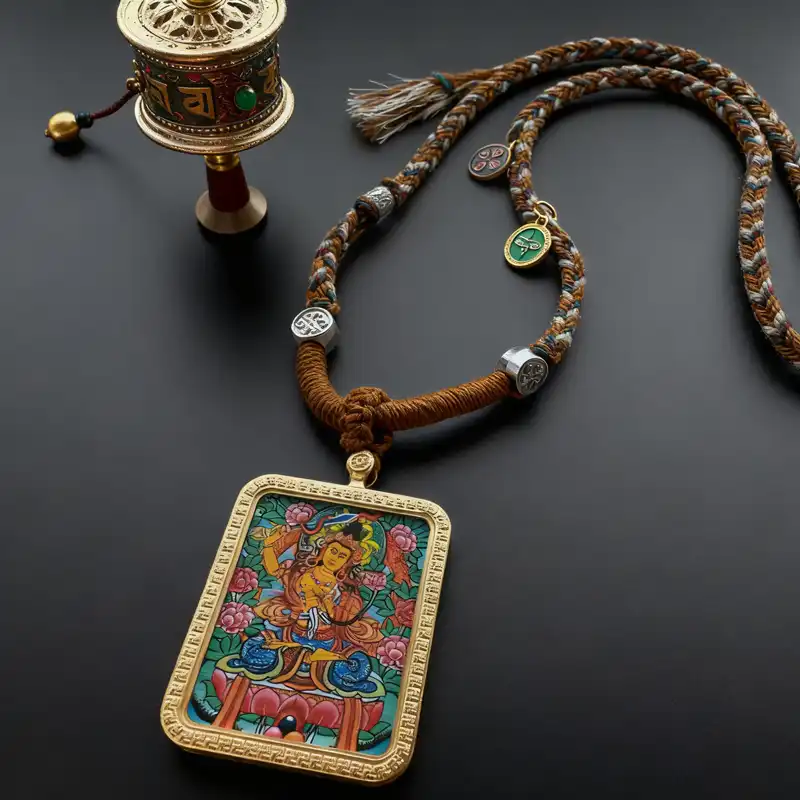
Ever wished you could cut through confusion, boost your focus, or tap into deeper clarity when making decisions? For centuries, practitioners have turned to Manjushri—the Bodhisattva of Wisdom—to cultivate exactly these qualities. But who is Manjushri, really? And how can this ancient figure from Tibetan Buddhism resonate with modern Americans seeking better focus, learning, or spiritual growth?
At AuraZen Life (www.aurazenlife.com), we specialize in hand-painted Manjushri Thangkas that bridge traditional wisdom and contemporary life. In this SEO-optimized guide, we’ll break down Manjushri’s story, his different forms, the power of his mantra, and how AI tools (paired with authentic Thangkas) can amplify his wisdom in your daily routine. Whether you’re a student, professional, or spiritual seeker, this guide turns Manjushri from a “mystical figure” into a practical ally.
Manjushri 101: The Bodhisattva of Wisdom Explained
Let’s start with the basics: Manjushri (pronounced “man-joo-shree”) is the personification of transcendent wisdom—the kind that cuts through ignorance, self-doubt, and chaos to reveal clear truth. Unlike “book smarts,” his wisdom is about understanding the nature of reality and applying it to live with purpose.
His backstory reads like an inspiring journey of self-discovery (relatable even to non-Buddhists): Eons ago, he was a king named Kamjung Sangpo, ruling a prosperous land. But he realized wealth and power didn’t bring fulfillment. So he renounced his kingdom, took Bodhisattva vows (promising to help all beings awaken), and spent lifetimes cultivating enlightenment. Today, he’s known as the “Lord of Wisdom”—a guide for anyone seeking clarity.
For Americans, Manjushri’s appeal lies in his universal promise: wisdom is accessible to everyone, not just monks or scholars. That’s why our Manjushri Thangkas (www.aurazenlife.com/manjushri-thangka) are among our top sellers—they’re visual reminders that clarity is within reach.
The 5 Key Forms of Manjushri (And Which One Fits Your Goals)
Manjushri appears in five distinct Tantric forms, each tied to specific intentions. Instead of overwhelming you with晦涩 details, we’ll map each form to modern needs—plus how to spot them in a Thangka:
1. Simhanada Manjushri (Red Manjushri: Confidence & Courage)
This red-haired form has one face and four arms, holding a blazing sword (cuts ignorance), an arrow, a lotus with a wisdom book, and a bow. He sits cross-legged on a lotus throne, draped in royal silks and jewels.
Who it’s for: Professionals needing to speak up in meetings, entrepreneurs pitching ideas, or anyone lacking confidence. His red hue symbolizes active energy—perfect for turning wisdom into action.
AI Tip: Pair our Simhanada Manjushri Thangka (www.aurazenlife.com/simhanada-manjushri) with our free AI-powered “Confidence Mantra Tracker.” The tool sends daily reminders to visualize the sword cutting through self-doubt, plus records your progress.
2. Tikshna Manjushri (Green/Yellow Manjushri: Focus & Learning)
Often called Green Manjushri (though some depictions are yellow), this form has one face and two arms. His right hand holds a wisdom sword, his left a lotus with the Prajnaparamita Sutra (the “Perfection of Wisdom” text). He sits in vajra pose (legs crossed, feet on thighs).
Who it’s for: Students prepping for exams, writers stuck in creative ruts, or anyone learning a new skill. His calm posture and focus on the wisdom text make him ideal for deep work.
Pro Pick: Our Tikshna Manjushri Thangka (www.aurazenlife.com/tikshna-manjushri) is a favorite among college students and remote workers—hang it above your desk to boost concentration.
3. Arapacana Manjushri (The “Builder” of Kathmandu: Transformation)
This form is legendary in Nepal—he’s said to have drained the ancient Kathmandu Valley lake with his sword, turning it into habitable land. Depicted with one face and two arms, he holds a sword (cuts delusion) and the Prajnaparamita Sutra, sitting in meditation pose.
Who it’s for: Anyone going through big life changes—career shifts, moving, or healing from loss. He symbolizes turning “impossible” situations into new beginnings.
Cultural Note: Our Arapacana Manjushri Thangkas (www.aurazenlife.com/arapacana-manjushri) are hand-painted by artisans in the Kathmandu Valley, honoring his connection to the region.
4. Vimala Manjushri (Blue-Black Manjushri: Clearing Obstacles)
Vimala is Manjushri’s “wrathful healing” form—his blue-black body and raised, flaming sword signal his power to cut through internal (self-doubt) and external (stress, conflict) obstacles. He still holds the wisdom book, balancing strength with insight.
Who it’s for: Anyone stuck in a rut, dealing with toxic relationships, or feeling blocked from goals. He’s not “angry”—he’s the courage to confront what’s holding you back.
5. Jnanasattva Manjushri (White Manjushri: Pure Wisdom)
This white-clad form is the most serene—one face, two arms, with his right hand in the “generosity mudra” and left holding a lotus with a blazing sword. White symbolizes pure, unclouded wisdom.
Who it’s for: Spiritual seekers focused on deep meditation or anyone wanting to align their actions with their values. He’s the “quiet wisdom” that guides big life choices.
Brand Highlight: Our Jnanasattva Manjushri Thangka (www.aurazenlife.com/jnanasattva-manjushri) uses 24K gold leaf for the sword’s flame—symbolizing wisdom that never fades.
The Legend of Manjushri & Kathmandu Valley (Why It Matters)
For Americans, stories make abstract concepts real—and Manjushri’s role in creating Kathmandu Valley is one of the most compelling. Here’s the cliffnotes version (rooted in Nepalese tradition and texts like Sri Swayambhu Mahachaitya):
Centuries ago, Kathmandu was a vast lake. Manjushri, then a wise sage from China, saw a blue flame (symbolizing the “Self-Born Buddha,” Swayambhu) glowing on a lotus in the lake. Determined to reach this sacred light, he took his blazing sword and carved a gorge at Chobhar to drain the water—revealing the fertile valley we know today.
This story isn’t just myth—it’s a metaphor for Manjushri’s superpower: using wisdom to turn chaos (a lake) into order (a home). It’s why our Manjushri Thangkas (www.aurazenlife.com/manjushri-thangka) resonate with anyone wanting to “drain” the chaos in their lives—whether that’s a cluttered mind or a chaotic schedule.
Manjushri Thangkas: How to Spot Authenticity (And Why It Matters)
Not all Manjushri Thangkas are created equal. Mass-produced prints lack the intention and craftsmanship that make authentic Thangkas powerful. Here’s what to look for—exactly what we offer at AuraZen Life:
-
Key Symbols: A blazing sword in the right hand (cuts ignorance), a lotus with the Prajnaparamita Sutra in the left (wisdom), and often a lion (symbolizes controlling the mind with wisdom).
-
Materials: Hand-painted on cotton canvas with natural mineral pigments (lapis lazuli for blue, cinnabar for red) and 24K gold leaf—these materials ensure the Thangka lasts decades (even generations).
-
Artisan Heritage: Our Thangkas are made by 15+ master artisans in the Kathmandu Valley and Tibet, each trained for 10+ years. Every piece comes with a certificate of authenticity (www.aurazenlife.com/authenticity).
The Manjushri Mantra: “Om Ah Ra Ba Tsa Na Dhi” Explained (Plus AI Tools)
Mantras are more than “chants”—they’re tools to focus the mind. Manjushri’s mantra, “Om Ah Ra Ba Tsa Na Dhi,” is designed to amplify wisdom. We’ll break down each syllable in plain English, plus share how AI can make your practice more effective:
Mantra Breakdown (No Sanskrit Degree Needed)
|
Syllable
|
Meaning for Modern Life
|
|---|---|
|
Om
|
The “universal hum”—grounds you in the present moment (like a mindfulness reset).
|
|
Ah
|
Opens you to seeing the “big picture” instead of getting stuck in details.
|
|
Ra
|
Helps you let go of limiting beliefs (“I’m not smart enough”)—the root of ignorance.
|
|
Ba
|
Boosts your ability to learn and retain new information (great for students/professionals).
|
|
Tsa
|
Teaches you to find peace in chaos—samsara (daily stress) and nirvana (calm) are connected.
|
|
Na
|
Reminds you that your actions matter—positive choices build clarity, negative ones cloud it.
|
|
Dhi
|
The “wisdom seed”—ignites your inner clarity and focus (hold this syllable longer when chanting).
|
Our AI-Powered Manjushri Mantra Tool (Exclusive to AuraZen Customers)
We turned Manjushri’s wisdom into a modern tool: our free AI Mantra Companion (available to anyone who purchases a Manjushri Thangka at www.aurazenlife.com). Here’s how it works:
-
Personalized Reminders: Input your goals (e.g., “study for exams,” “improve work focus”) and the AI sends timed mantra prompts (e.g., 10 minutes before your study session).
-
Audio Guidance: Professional voiceover (in American English) teaches proper pronunciation—no more guessing how to say “Tsa” or “Dhi.”
-
Progress Tracking: Log your chanting sessions, and the AI generates a “Wisdom Journal” showing how consistency correlates with your goal (e.g., “3 weeks of daily chanting = 20% better focus during meetings”).
Why Authentic Manjushri Thangkas From AuraZen Life Stand Out
When you buy a Manjushri Thangka from AuraZen Life (www.aurazenlife.com), you’re not just buying art—you’re investing in a tool that grows with you. Here’s what makes our pieces unique:
-
Intentional Craftsmanship: Every brushstroke is infused with the artisan’s intention to honor Manjushri’s wisdom—unlike mass-produced prints that feel “empty.”
-
AI Integration: Our exclusive AI tools turn a “decor piece” into a daily practice companion—perfect for busy Americans who want spirituality to fit their schedule.
-
Fair Trade Promise: We work directly with artisans, paying 2x the market rate and funding their children’s education. Your purchase preserves ancient skills (www.aurazenlife.com/fair-trade).
Final Thoughts: Manjushri as Your Modern Wisdom Ally
Manjushri isn’t just a “Buddhist figure”—he’s a symbol of the wisdom we all carry within. His blazing sword isn’t about being aggressive—it’s about courageously cutting through what holds us back. His wisdom book isn’t about memorizing texts—it’s about applying clarity to daily life.
Whether you’re hanging a Manjushri Thangka above your desk to boost work focus, using his mantra to study better, or leaning on his story to navigate change, he’s a reminder: wisdom is a practice, not a destination.
Ready to bring Manjushri’s wisdom into your life? Explore our hand-painted Manjushri Thangka collection (www.aurazenlife.com/manjushri-thangka) and claim your free AI Mantra Companion. Let clarity be your next big win.
