

Artists & Heritage, Aurazen Life, Design & Style, Sacred Symbols, Thangka & Culture, Tibetan Deities
Unveiling the Spiritual Canvas: Tibetan Thangkas and the Quest for Bodhicitta
Introduction: The Allure of Tibetan Art
Throughout history, art has served as a powerful medium through which humanity explores the depths of the soul, giving shape to our emotions, beliefs, and the ineffable mysteries that surround us. It’s a universal language that transcends cultural and temporal boundaries, acting as a mirror reflecting the complexity of the human spirit. When we think about art in relation to spiritual exploration, few forms are as captivating and profound as Tibetan art.
Tibetan art, deeply rooted in the rich soil of Vajrayana Buddhism, stands as a unique and vibrant expression of faith, philosophy, and aesthetics. It’s not merely a visual delight but a spiritual guide, a means of communion with the divine, and a path to self – realization. Each piece of Tibetan art, whether it’s a mandala, a thangka, or a sculpture, is imbued with layers of symbolism, carrying the weight of centuries – old wisdom and the collective spiritual aspirations of the Tibetan people.
For those eager to delve deeper into the world of Tibetan art and its spiritual significance, our website www.aurazenlife.com offers a wealth of knowledge and insights. Here, you can embark on a journey of discovery, exploring the intricate details of this ancient art form and uncovering the secrets it holds.
The Vajrayana Foundation: A Spiritual Blueprint
Understanding Vajrayana Buddhism
Vajrayana Buddhism, a distinctive and profound branch of Mahayana Buddhism, emerged in India around the 5th century CE. The term “Vajrayana” is rich in symbolism; “vajra” means ‘indestructible,’ often associated with a diamond’s unyielding nature, and “yana” denotes ‘vehicle,’ signifying that it serves as a means to carry practitioners towards enlightenment.
Originating during a time of great spiritual and philosophical ferment in India, Vajrayana built upon the core tenets of Mahayana Buddhism. However, it introduced a more elaborate and esoteric approach to spiritual practice. While Mahayana Buddhism emphasizes the bodhisattva path of compassion for all sentient beings, Vajrayana adds a layer of complex rituals, mantras, and visualizations. These practices are designed to accelerate the journey to enlightenment, allowing practitioners to harness the energy of the mundane world and transform it into spiritual insight.
One of the fundamental goals of Vajrayana is the attainment of bodhicitta, an enlightened state of mind. This state is not just a personal achievement but a recognition of the interconnectedness of all beings. In Vajrayana, it is believed that every individual has the latent potential to become a Buddha, to achieve full enlightenment. Bodhisattvas, those who aspire to bodhicitta, are driven by a selfless desire to liberate all beings from suffering. They see the pain and ignorance in the world and are motivated to use their spiritual practice as a means to alleviate it.
What sets Vajrayana apart from other Buddhist traditions is its inclusive view of the path to enlightenment. It doesn’t shy away from the complexities of human experience. Instead, it embraces every aspect of life, from the most ordinary daily activities to the most intimate and often-taboo experiences, as potential sources of spiritual growth. For example, the energy generated in sexual experiences, when transformed and channeled through proper spiritual practice, can be a powerful force in the pursuit of bodhicitta. This bold and inclusive approach is a cornerstone of Vajrayana philosophy, making it a unique and compelling spiritual path.
The Inseparable Bond with Tibetan Art
The connection between Vajrayana Buddhism and Tibetan art is as deep and intricate as the roots of an ancient tree. Tibetan art is not merely a reflection of Vajrayana; it is an active participant in the spiritual journey of practitioners, a living manifestation of the religion’s profound teachings.
In the context of Vajrayana, Tibetan art serves multiple crucial functions. Firstly, it acts as a visual repository of religious knowledge. Mandalas, thangkas, and sculptures are filled with symbols, colors, and forms that represent the pantheon of Vajrayana deities, the stages of the spiritual path, and the complex philosophical concepts of the religion. For instance, a mandala, with its geometric precision and intricate patterns, is a map of the universe as understood in Vajrayana. It represents the cosmic order, the relationship between the physical and spiritual realms, and serves as a focal point for meditation, guiding the practitioner’s mind towards a deeper understanding of the divine.
Thangkas, the iconic scroll paintings of Tibet, are another prime example. Painted on cotton or silk, they depict various spiritual figures, mandalas, or scenes from Buddhist mythology. Each element in a thangka, from the posture of the deities to the colors used, is laden with symbolic meaning. The creation of a thangka is a highly ritualized process, often commissioned by monasteries or wealthy patrons. The anonymity of the artists is a testament to the art form’s focus on the religious significance rather than individual recognition. These artworks are passed down through generations, serving as a link between the present and the past, and between the earthly and the divine.
Secondly, Tibetan art is a powerful tool for meditation and spiritual transformation. Through the practice of visualization, practitioners engage with these artworks in a profound way. They meditate on the thangka, studying every detail, from the deity’s facial expressions to the symbolic gestures of their hands. As they do so, they absorb the qualities represented by the image, gradually integrating them into their own being. Over time, with the guidance of a teacher, the practitioner begins to embody the traits of the deity, a transformative process that brings them closer to enlightenment.
In essence, Tibetan art is an essential part of the Vajrayana spiritual ecosystem. It breathes life into the abstract concepts of the religion, making them accessible and tangible. To truly understand Tibetan art, one must delve into the rich tapestry of Vajrayana Buddhism, and vice versa. They are two sides of the same coin, each enriching and deepening the other in a symbiotic relationship that has endured for centuries. For more in – depth exploration of this fascinating connection, visit our website www.aurazenlife.com, where you can find a wealth of resources on Tibetan art and Vajrayana Buddhism.
Tibetan Art: A Tapestry of Symbolism and Spirituality
Rich Imagery and Profound Symbolism
Tibetan art is a veritable cornucopia of rich imagery, intricate iconography, and profound symbolism. It serves as a visual lexicon that communicates the complex tenets of Buddhism in a language that transcends words. The symbols used in Tibetan art are as diverse as they are meaningful, each carrying a specific message and contributing to the overall spiritual narrative.
One of the most prominent symbols in Tibetan art is the mandala. A mandala is a geometric diagram that represents the universe in Vajrayana Buddhism. It is a highly structured and symmetrical design, often featuring a central deity surrounded by concentric circles and various geometric shapes. The mandala is not just a beautiful work of art; it is a powerful tool for meditation. By focusing on the mandala, practitioners can enter a state of deep concentration, gradually transcending the distractions of the mundane world and moving closer to a profound understanding of the divine. The concentric circles of the mandala symbolize the different levels of existence, from the material world on the outer rings to the spiritual realm at the center. Each element within the mandala, such as the lotus petals, the vajra (diamond – thunderbolt), and the various deities, has its own symbolic meaning. For example, the lotus represents purity and enlightenment, emerging from the muddy waters of the material world to bloom in the clear light of spiritual awareness.
Color also plays a crucial role in Tibetan art symbolism. The traditional color palette of Tibetan art is based on the five – color system: white, yellow, red, green, and blue. Each color corresponds to one of the five elements (space, earth, fire, wind, and water) and has a specific spiritual significance. White, associated with space, symbolizes purity, emptiness, and the clear light of enlightenment. Yellow, representing the earth, stands for stability, wisdom, and the nurturing qualities of the Buddha – nature. Red, linked to fire, embodies energy, compassion, and the transformative power of the Dharma. Green, associated with wind, symbolizes growth, vitality, and the dynamic nature of the spiritual path. Blue, corresponding to water, represents wisdom, the all – pervading nature of the Buddha – mind, and the depth of spiritual insight. These colors are not randomly chosen but are carefully selected and combined according to religious principles to convey specific spiritual messages.
Another important aspect of Tibetan art symbolism is the use of hand gestures, known as mudras. Mudras are a form of non – verbal communication that conveys specific spiritual meanings. For example, the abhaya mudra, where the hand is raised with the palm facing outward, symbolizes fearlessness and protection. The varada mudra, with the hand extended downward, palm facing outward, represents generosity and the granting of wishes. These mudras are often depicted in thangkas and sculptures of deities, adding another layer of symbolic meaning to the artworks.
The Significance of Thangkas
Among the various forms of Tibetan art, thangkas hold a special place. A thangka is a traditional Tibetan scroll painting, usually painted on cotton or silk. These paintings are typically rectangular in shape and are often framed with silk or brocade. Thangkas can range in size from small, portable pieces that can be carried by a pilgrim to large, elaborate works that adorn the walls of monasteries.
The creation of a thangka is a highly ritualized and painstaking process. It begins with the preparation of the canvas. The cotton or silk is first stretched tightly over a wooden frame and then coated with a layer of chalk – based gesso. This creates a smooth, white surface on which the artist can paint. The artist then sketches the design onto the canvas using charcoal or a light pencil. This initial sketch is a crucial step, as it determines the overall composition and layout of the thangka.
Once the sketch is complete, the artist begins the process of painting. Thangkas are traditionally painted using natural mineral and vegetable pigments, which are known for their vivid colors and long – lasting qualities. These pigments are ground by hand and mixed with a binder, such as gum arabic or animal glue. The painting process is slow and meticulous, with the artist adding layer upon layer of color to build up the image. Gold leaf is often used to add a sense of luxury and spiritual significance to the thangka. It is applied to the areas of the painting that represent the divine, such as the halos around the deities or the details of their clothing and jewelry.
Thangkas are not just works of art; they are powerful religious and spiritual tools. They serve as focal points for meditation, allowing practitioners to engage in the practice of visualization. By meditating on a thangka, a practitioner can enter a deep state of concentration and begin to internalize the qualities and attributes of the deity or spiritual concept depicted in the painting. Over time, through repeated meditation, the practitioner can gradually embody these qualities, bringing them into their daily life and spiritual practice.
In addition to their role in meditation, thangkas also serve as a means of transmitting religious teachings. They are often used in religious ceremonies and rituals, where they are displayed and venerated. Monks and lamas may use thangkas to teach the Dharma to students, pointing to the various elements in the painting and explaining their symbolic meanings. Thangkas can also be passed down through generations within a family or a religious lineage, serving as a link between the past and the present and a source of spiritual inspiration.
To explore more about the fascinating world of thangkas and other aspects of Tibetan art, visit our website www.aurazenlife.com. Here, you can find a wealth of resources, including in – depth articles, high – quality images, and expert insights into this ancient and profound art form.
Green Tara: A Deity of Compassion and Enlightenment
The Legend and Significance of Green Tara
Green Tara holds a revered and exalted position in Tibetan Buddhism, embodying the profound qualities of compassion, wisdom, and the unwavering pursuit of enlightenment. She is the principal manifestation of Tara and serves as the iconic feminine symbol of enlightenment within this spiritual tradition.
According to the rich tapestry of Tibetan Buddhist lore, Green Tara has a remarkable origin story. She is said to have emerged from Princess Jnanachandra, a devout and steadfast follower of Buddha’s teachings. In a time when the prevailing belief among monks was that one needed to pray for reincarnation as a man to achieve nirvana, Princess Jnanachandra defied this convention. With unwavering determination, she vowed to attain enlightenment while remaining in a woman’s body. Through her unwavering devotion, the accumulation of good karma, and her deep mastery in the art of meditation, she achieved her noble goal and became the revered Green Tara, known as the swift liberator.
The significance of Green Tara in Tibetan Buddhism is multi – faceted. She is widely believed to possess the power to remove obstacles that impede the spiritual journey. These obstacles can be both external, such as the hardships and challenges of the physical world, and internal, like the mental and emotional barriers that hold one back from spiritual growth. By venerating and earnestly praying to Green Tara, practitioners believe that they can find the strength and guidance to overcome these obstacles, allowing them to progress on their path to enlightenment.
Moreover, Green Tara is seen as a wish – fulfilling deity. She is thought to have the ability to fulfill the sincere wishes of her devotees, not in a materialistic sense but in a way that aligns with their spiritual development. Whether it’s the wish to gain deeper spiritual insights, to cultivate greater compassion, or to break free from the cycle of suffering, Green Tara is there to assist. This connection between Green Tara and the fulfillment of wishes is deeply intertwined with the concept of bodhicitta. By helping practitioners remove obstacles and fulfill their spiritual wishes, Green Tara aids in the transcendence of maya, the illusion that clouds our perception of the true nature of reality. As we break free from this illusion, we move closer to achieving bodhicitta, the enlightened state of mind that is the ultimate goal of Vajrayana Buddhism. In essence, Green Tara serves as a guiding light, a compassionate mother figure, leading practitioners through the darkness of ignorance and towards the radiant light of enlightenment.
Analyzing the Image of Green Tara
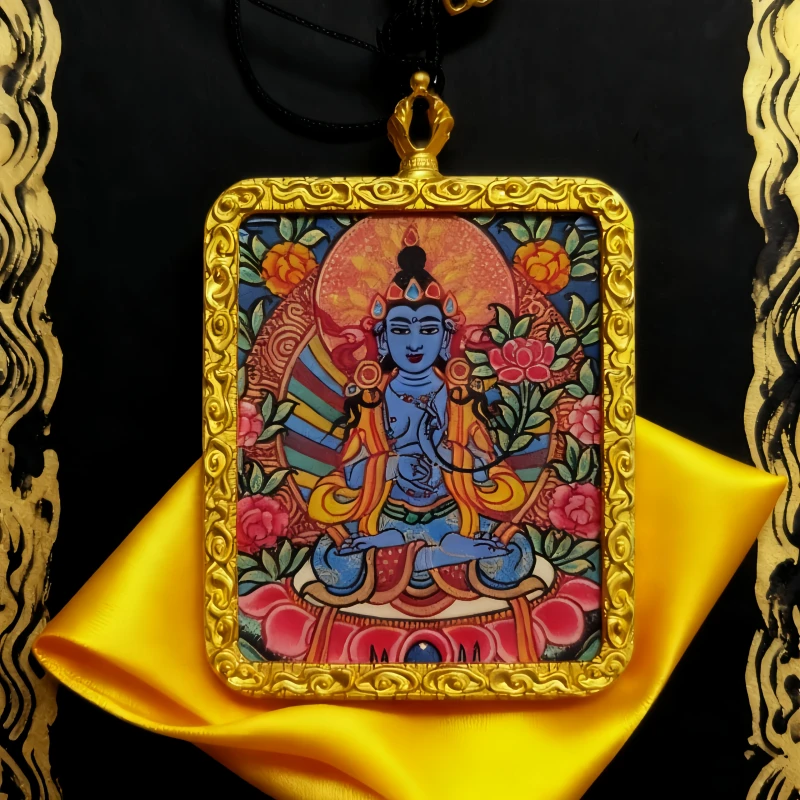
When we closely examine the image of Green Tara in a thangka, a world of symbolism and spiritual meaning unfolds before our eyes. Each element of the image, from the colors used to the posture, gestures, and adornments of the deity, is a carefully crafted symbol, carrying profound spiritual messages.
The most immediately striking feature of Green Tara is her color. Her bright green form is not a random choice; it is rich in symbolic significance. Green represents compassion, the deep – seated empathy and concern for the suffering of all sentient beings. It also embodies wisdom, the understanding of the true nature of reality that comes from spiritual insight. Additionally, the color green is associated with enlightened action, the active engagement in the world to alleviate the suffering of others. In the context of the five – element system in Tibetan Buddhism, green is linked to the wind element. This connection symbolizes Green Tara’s “commitment to act for the benefit of beings with the swiftness of the wind.” She is always ready to spring into action, quickly and efficiently bringing relief to those in need.
Green Tara is seated in sukhasana, a relaxed cross – legged position, atop a lotus. The lotus is a universal symbol in Buddhism, representing purity, enlightenment, and the journey from the muddy waters of the material world to the clear light of spiritual awareness. By sitting on a lotus, Green Tara is depicted as having transcended the impurities of the mundane world and having achieved a state of spiritual purity. The halos that encircle her further accentuate her buddha nature and enlightenment. These halos are a visual representation of her spiritual radiance, the inner light that shines brightly within her and illuminates the path for others.
In her left hand, Green Tara holds a blue lotus. The blue lotus is a powerful symbol of the Dharma, the teachings of the Buddha. It represents the power of the Dharma to help us navigate the challenges and complexities of life. The mudra, or hand gesture, in which she holds the lotus may signify a union of compassion and wisdom. This gesture suggests that Green Tara’s actions are always guided by both her deep compassion for all beings and her profound wisdom, which allows her to act in the most beneficial way.
In contrast, her right hand is open and resting on her extended leg. This hand gesture is a symbol of her readiness to assist sentient beings on their path to liberation. It is a gesture of welcome, of offering help and support. It conveys the message that Green Tara is always there, ready to reach out and guide those who are struggling, to offer them a helping hand on their journey towards freedom from suffering.
Adorned with intricate jewelry, Green Tara exudes both internal and external beauty and strength. The jewelry is not just for adornment; it also symbolizes her spiritual wealth and the richness of her enlightened state. Her youthful and robust form represents the vitality and energy of the spiritual path. It is a reminder that the pursuit of enlightenment is a dynamic and life – affirming journey.
The painting of Green Tara is often embellished with florals and subtle references to nature. These elements suggest themes of life and rejuvenation. They remind us of the cyclical nature of life, the constant renewal and growth that is possible on the spiritual path. As we engage in the practice of visualization with this thangka, guided by a knowledgeable teacher, we are invited to dive deep into the symbolism and archetype represented. By meditating on the deity, chanting her mantra, and gradually internalizing and embodying her qualities, we can begin to transform ourselves, moving closer to the state of enlightenment that Green Tara represents.
Conclusion: The Enduring Legacy of Tibetan Art
In our exploration of Tibetan art and its profound connection with Vajrayana Buddhism, we have embarked on a journey of discovery, delving into a world where spirituality and aesthetics converge in a harmonious and captivating way. Tibetan art, with its intricate symbolism, rich history, and deep – seated religious significance, offers a unique window into the spiritual landscape of Tibet.
At the heart of Tibetan art lies the thangka, a remarkable art form that serves as a spiritual guide, a visual encyclopedia of Buddhist teachings, and a medium for meditation. The thangka’s precise and methodical creation process, governed by religious texts, ensures that every element within it, from the colors to the gestures of the deities, holds symbolic meaning. This attention to detail and the strict adherence to religious principles make thangkas not just beautiful artworks but powerful spiritual tools.
Our analysis of Green Tara, a revered deity in Tibetan Buddhism, has further illuminated the depth of meaning within Tibetan art. From her origin story as Princess Jnanachandra, who defied convention to achieve enlightenment in a woman’s body, to the symbolic elements in her thangka representation, Green Tara embodies the qualities of compassion, wisdom, and the pursuit of enlightenment. Through the practice of visualization with her thangka, practitioners can internalize these qualities, gradually transforming themselves on their path to bodhicitta.
Tibetan art, epitomized by thangkas, transcends the boundaries of traditional art. It is a living, breathing manifestation of the spiritual wisdom of the Tibetan people. It serves as a link between the earthly and the divine, guiding practitioners towards the ultimate goal of enlightenment. Each brushstroke on a thangka, each symbol and color, is a step on the journey of spiritual awakening.
For those who are intrigued by the world of Tibetan art and Vajrayana Buddhism, our website www.aurazenlife.com is a valuable resource. Here, you can find more in – depth articles, high – quality images, and expert insights into this fascinating subject. We encourage you to continue exploring, to delve deeper into the rich tapestry of Tibetan art, and to discover the profound wisdom it holds.
In a world that often seems dominated by the material and the mundane, Tibetan art offers a refuge, a source of inspiration, and a reminder of the spiritual dimension of life. Let us cherish and appreciate this unique art form, not only for its aesthetic beauty but for the spiritual nourishment it provides. As we do so, we can begin to understand the true essence of Tibetan art: its ability to transform, to inspire, and to guide us on the path to enlightenment.
