Your cart is currently empty!
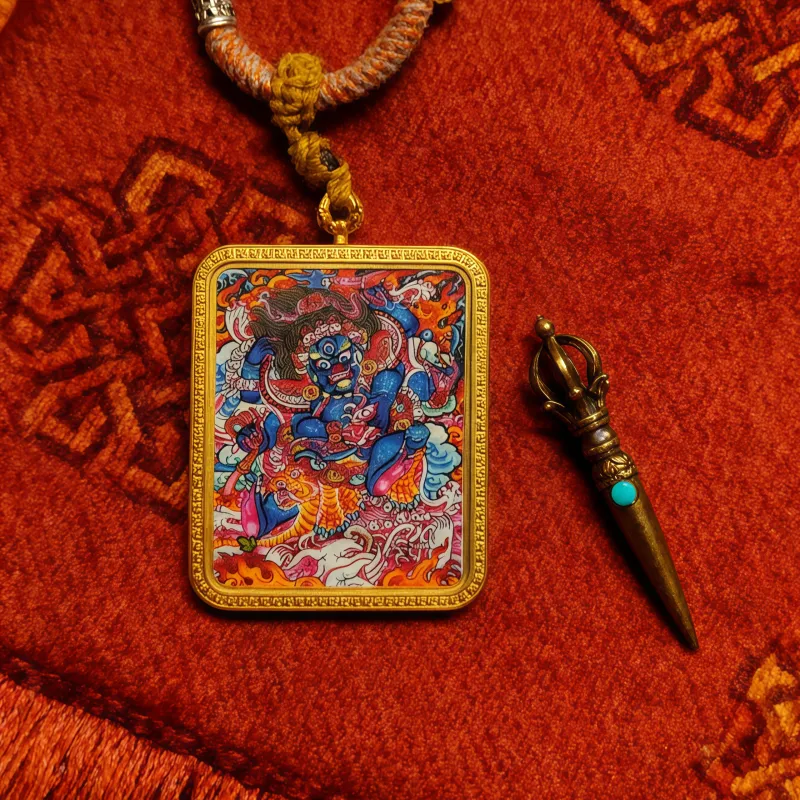
Wrathful Deities in Thangka Art: Why “Scary” Buddhas Are Symbols of Protection | AuraZen Life
magine walking into a room and locking eyes with a Thangka: a deity with fangs bared, skin the color of storm clouds, wearing a crown of skulls, and surrounded by flames. Your first thought? That’s terrifying. Your second thought—if you know Tibetan Buddhism—might be: Thank you for protecting me.
These are wrathful deities: the “scary” side of Buddhist art that’s actually a powerful symbol of compassion and protection. At AuraZen Life (www.aurazenlife.com), we don’t just paint these deities—we honor their sacred purpose. Each wrathful Thangka we craft follows 1,000-year-old iconographic rules, uses natural mineral pigments that last centuries, and comes with AI tools to decode their “scary” symbols into meaningful wisdom. Let’s demystify the most misunderstood figures in Thangka art.
First: Why Do Buddhist Deities Look “Wrathful”?
Buddhism is all about peace—so why would it feature deities that look like they belong in a horror movie? The answer is simple: wrathful deities aren’t “evil.” They’re enlightened beings who take on terrifying forms to help us, not hurt us.
Think of it this way: If a child is about to touch a hot stove, you don’t smile and ask nicely—you yell, “Stop!” That yell isn’t anger; it’s love. Wrathful deities are the “yell” of enlightenment: they confront our worst impulses—greed, anger, ignorance—head-on, so we can transform them into wisdom.
Their “scary” traits are metaphors, not threats: skull crowns represent overcoming ego (we’re all mortal, after all); flames symbolize burning away delusion; fangs show the power to “bite through” suffering. Our AI Symbol Decoder (scan any wrathful Thangka’s QR code) breaks down these details for you—no advanced Buddhist knowledge required (www.aurazenlife.com/ai-symbol-decoder).
The Top 5 Wrathful Deities in Thangkas (And What They Mean for You)
Not all wrathful deities are the same. Each has a unique purpose—from protecting your home to helping you conquer fear of death. Here are the most common ones we craft at AuraZen Life, and how they fit into modern spiritual life:
1. Mahakala: Your Spiritual Bodyguard
Mahakala is the most popular wrathful deity—and for good reason: he’s the ultimate protector. Often depicted as a muscular black figure with a crown of five skulls and a fierce stare, he’s linked to Shiva (the Hindu creator-destroyer) but reimagined in Buddhism as a bodhisattva—an enlightened being who delays nirvana to help others.
His “scary” details tell a story:
-
Five skulls: Transform the “five poisons” (ignorance, greed, anger, pride, jealousy) into wisdom.
-
Fierce expression: Confronts negative energy so you don’t have to.
-
Black skin: Absorbs and neutralizes harm.
Our customers often hang Mahakala Thangkas in entryways or offices—places where stress or “toxic” energy builds up. We use natural iron oxide pigment for his black skin (it deepens with age, not fades) and 24K gold leaf for his eyes (to symbolize wisdom piercing darkness). See our best-selling Mahakala Guardian Thangka up close with our 360° Viewer (www.aurazenlife.com/mahakala-thangka).
2. Yamantaka: The Conqueror of Death
Yamantaka means “Destroyer of Yama”—Yama being the Hindu-Buddhist god of death. He’s the wrathful form of Manjushri, the bodhisattva of wisdom, and he’s here to help you overcome your biggest fear: death itself.
His appearance is dramatic: deep blue skin, nine faces (one a buffalo head), 34 arms, and 16 legs. Each arm holds a tool to “defeat” death—from a sword (cuts through delusion) to a skull cup (embraces mortality). The buffalo head? It symbolizes the “wild” fear of death we all carry—and Yamantaka’s power to tame it.

Leave a Reply