

What is Thangka?
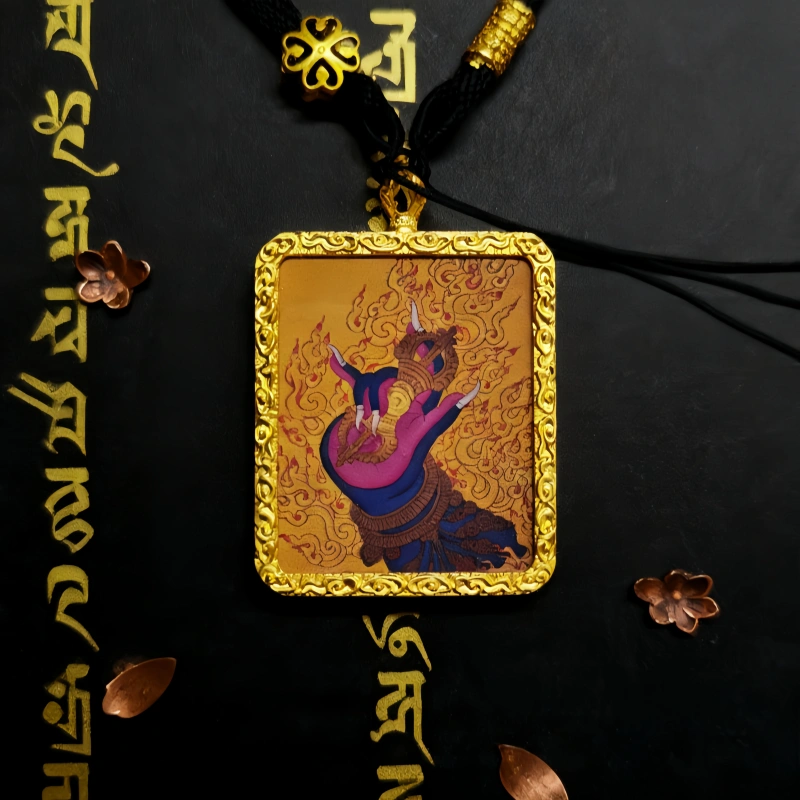
I. Definition and Basic Form of Thangka
Thangka is a transliteration of the Tibetan word “Thangka,” also called Tangga. It is a type of Tibetan scroll painting, usually painted on cloth or paper and then mounted with silk. The upper horizontal axis has a thin rope for hanging, and the lower axis is decorated with exquisite tassels at both ends. It has a history of over 1400 years and is a highly representative art form of Tibetan culture.
II. Historical Origins and Cultural Significance of Thangka
Thangka is a novel painting art that emerged during the reign of Songtsen Gampo. It is a scroll painting mounted with colored silk, possessing distinct ethnic characteristics, rich religious overtones, and a unique artistic style, and has always been regarded as a treasure by the Tibetan people.
In terms of content, it mainly depicts Tibetan religion, history, culture, art, and science and technology, embodying the faith and wisdom of the Tibetan people. It records the civilization, history, and development of Tibet, and expresses the Tibetan people’s unparalleled feelings for Buddha and their boundless love for their snowy homeland.
Thangka art is an invaluable intangible cultural heritage of Chinese folk art. As early as the 9th century AD, with the spread of Tibetan Buddhism in Qinghai, Tibetan Buddhist painting art, represented by Thangka, flourished on the Qinghai land. After nearly a thousand years of inheritance and development, it has now formed representative categories such as Qinghai Regong art, Zongka art, and Tibetan Nyonya art. Regong Thangka art, known as “the fiery Amdo Thangka,” is particularly noteworthy. In terms of its imagery, lines, colors, composition, and decoration, while inheriting the delicate and graceful artistic style of the Mantang school of traditional Tibetan painting, it boldly borrows characteristics from Han Chinese painting, forming a refined and rounded style.
III. Artistic Characteristics and School Inheritance of Thangka
Thangka painting art is a unique flower of Tibetan culture, with a profound influence for over a thousand years. Its composition is rigorous, balanced, full, and varied. The painting techniques mainly include meticulous brushwork with heavy colors and line drawing. Over its long development, it has formed several highly distinctive artistic schools, such as Regong Thangka, which stands out for its integration of Han and Tibetan painting characteristics.
IV. Core Content and Painting Techniques of Thangka
Thangkas encompass a wide range of subjects, including diverse Buddhist images and scenes reflecting Tibetan history and customs. Tibetan Thangkas are characterized by exquisite techniques, primarily employing meticulous brushwork and rich colors, using line drawing to depict a wealth of religious and secular themes through delicate lines and vibrant hues.
V. Main Varieties and Production Processes of Thangkas
Thangkas come in many varieties, including painted and printed Thangkas, as well as embroidered, brocade (appliqué), tapestry, appliqué, and pearl Thangkas.
– Embroidered Thangkas: Made with various colored silk threads, depicting landscapes, figures, flowers, birds, pavilions, and buildings.
– Brocade Thangkas: Woven with satin as the base, using several colors of silk as the weft, creating a jacquard pattern, and then pasted onto the fabric; hence, it is also called “appliqué embroidery.”
– Appliqué Thangkas: Made by cutting various figures and Thangka art patterns from colored satin and pasting them onto the fabric.
– Kesi Thangka: Using the “continuous warp, discontinuous weft” technique, various colored weft threads are used solely for strong decorative effect. Some even embellish the colorful patterns with pearls and gemstones sewn with gold thread, creating a harmonious and dazzling effect. Kesi is a unique Chinese craft that transfers painting onto silk fabric. These woven Thangkas are dense and thick, with rigorous composition, exquisite patterns, and vibrant colors. Many Tibetan woven Thangkas were specially made in inland China, especially those introduced to Tibet during the Yongle and Chenghua periods of the Ming Dynasty. Later, Tibet also began producing woven Thangkas with embroidery and appliqué techniques.
– Printed Thangka: There are two types. One is a full-page, multi-color printed Thangka, which is then mounted. The other type involves first carving the painted image onto a block, then printing it with ink onto thin silk or fine cloth, and finally coloring and mounting it. This type of Thangka features delicate brushstrokes, vigorous carving techniques, and a unique style where ink is used on the outside and vermilion on the inside, creating distinct layers. The patterns and designs are interwoven with warp threads, giving the impression of carving, resulting in an elegant and three-dimensional decorative effect. Currently, most Thangkas sold on the market are printed or hand-painted.
