

Artists & Heritage, Aurazen Life, Design & Style, Home & Meditation, Sacred Symbols, Thangka & Culture, Tibetan Deities
What Is a Bodhisattva in Buddhism? The Heart of Compassion & Enlightenment | AuraZen Life
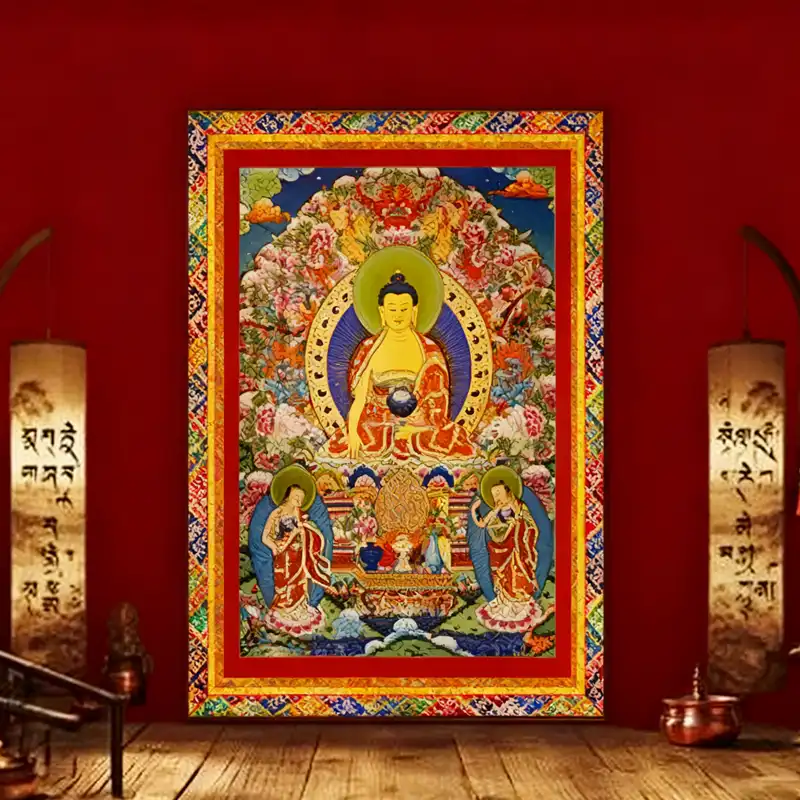
In a world that often glorifies self-reliance and individual success, Buddhism offers a radical counterpoint: the bodhisattva—an enlightened being who chooses to stay connected to the world, not to escape it. A bodhisattva’s journey isn’t about personal perfection; it’s about dedicating every breath, action, and thought to lifting others up. At AuraZen Life (www.aurazenlife.com), we honor these compassionate guides through our hand-painted Bodhisattva Thangkas—each brushstroke infused with the same spirit of “for the sake of all beings” that defines the bodhisattva path.
More than just sacred art, our Thangkas are paired with AI tools that make the wisdom of bodhisattvas accessible to modern seekers. Whether you’re new to Buddhism or a seasoned practitioner, this guide demystifies what a bodhisattva truly is, the core of their practice (bodhicitta, the “awakening mind”), and how these enlightened beings can inspire your daily life. Let’s dive into the heart of the Mahayana Buddhist path—one of compassion, service, and boundless hope.
What Is a Bodhisattva? Breaking Down the Definition
At its simplest, a bodhisattva (pronounced “boh-dee-sat-vuh”) is someone who has taken a sacred vow to attain full enlightenment—not just for their own liberation, but for the sake of every sentient being (humans, animals, even spirits) trapped in suffering (samsara).
Key truths about bodhisattvas that modern seekers need to know:
- They’re not “gods” or “mythical beings”—they’re beings (human or otherwise) who’ve chosen compassion as their life’s purpose.
- Enlightenment isn’t a finish line; it’s a starting point. Many bodhisattvas could enter nirvana (the state of ultimate freedom) but delay it voluntarily to stay in the world and help others.
- In Tibetan Buddhism, bodhisattvas are recognized at different stages of achievement, but all share the same core commitment: bodhicitta—the “awakening mind” that prioritizes others’ well-being over one’s own.
Some bodhisattvas are famous, like Avalokiteshvara (the Bodhisattva of Compassion), while others walk among us unrecognized—maybe as a neighbor who lends a hand, a teacher who inspires, or even a kind stranger. Their form doesn’t matter; their intention does. Our AI Bodhisattva Guide (scan any of our Thangkas’ QR codes) helps you identify which bodhisattva aligns with your values—whether you seek wisdom, healing, or protection (www.aurazenlife.com/ai-bodhisattva-guide).
Bodhicitta: The Soul of the Bodhisattva Path
To understand bodhisattvas, you must first understand bodhicitta—the “awakening mind” that is the foundation of their practice. Coined in Mahayana Buddhism around the 2nd century CE (around the same time as the revered Prajnaparamita Sutras), bodhicitta is defined as:
“The desire to realize enlightenment for the sake of all beings.”
It’s not just a feeling—it’s a commitment that shows up in three forms:
- Aspirational Bodhicitta: The heartfelt wish to help others and attain enlightenment (the “seed” of the bodhisattva path).
- Actionable Bodhicitta: Turning that wish into daily practice—small acts of kindness, empathy, and service.
- Ultimate Bodhicitta: The innate expression of your true “Buddha nature”—compassion that flows freely, without effort or self-consciousness.
His Holiness the 14th Dalai Lama calls bodhicitta “the pillar of the bodhisattva’s practice,” adding:
“There is no more virtuous mind than bodhicitta. There is no more powerful mind than bodhicitta. To accomplish the purpose of all living beings, there is nothing superior to bodhicitta.”
In short, bodhicitta frees us from the trap of self-absorption. It’s the reason a bodhisattva doesn’t just meditate in a cave—they show up for the world. Our free Bodhicitta Meditation Tool (downloadable via www.aurazenlife.com/bodhicitta-meditation) guides you through 5-minute daily practices to cultivate this awakening mind, paired with reflections from our Thangka art.
The Top Bodhisattvas in Buddhism (And What They Mean for You)
Bodhisattvas are often depicted in Thangka art with unique symbols that reflect their special gifts. Here are the most revered bodhisattvas we feature at AuraZen Life, and how their energy can support your modern journey:
1. Avalokiteshvara (Chenrezig): Bodhisattva of Compassion
The most beloved bodhisattva worldwide, Avalokiteshvara is the embodiment of unconditional love. Often depicted with 1,000 arms (to reach all beings) and 1,000 eyes (to see all suffering), he carries a lotus (purity) and a mala (prayer beads). His mantra—“Om Mani Padme Hum”—is chanted by millions to invoke compassion.
- Modern relevance: Perfect for anyone seeking to soften anger, heal relationships, or find empathy for themselves and others. Our Avalokiteshvara Compassion Thangka (www.aurazenlife.com/avalokiteshvara-thangka) uses soft blue mineral pigments to symbolize his boundless care.
2. Manjushri: Bodhisattva of Wisdom
Manjushri is the bodhisattva of clear thinking and insight, depicted with a sword (to cut through ignorance) and a book (the Prajnaparamita Sutra, the “Perfection of Wisdom”). His yellow skin symbolizes wisdom, and he rides a lion (courage to face truth).
- Modern relevance: Ideal for students, entrepreneurs, or anyone feeling stuck in confusion. Our AI Wisdom Tool (linked to every Manjushri Thangka) offers personalized prompts to sharpen focus and make mindful decisions.
3. Tara (Green & White): Bodhisattva of Protection & Healing
Tara, the “Mother of all Buddhas,” appears in two key forms:
- Green Tara: The “Swift Savior,” depicted with a lotus, ready to act quickly to protect from fear and obstacles.
- White Tara: The “Bodhisattva of Long Life,” holding a vase of nectar (healing) and a lotus.
- Modern relevance: Green Tara is a favorite for those navigating life changes (career shifts, moves, loss), while White Tara supports physical and emotional healing. Our Tara Dual Blessing Thangka (www.aurazenlife.com/tara-thangka) features both forms, crafted with lapis lazuli and pearl pigments.
4. Maitreya: The Future Buddha
Maitreya is the bodhisattva who will become the next Buddha when our world is ready. Depicted sitting on a throne (waiting patiently) with a stupa (enlightenment) in his hands, he symbolizes hope and new beginnings.
- Modern relevance: Great for anyone feeling discouraged or stuck in the past. His energy reminds us that growth takes time, and the future holds possibility.
5. Padmasambhava (Guru Rinpoche): The “Second Buddha”
Padmasambhava brought Buddhism to Tibet, merging spiritual wisdom with practical life. Depicted in a red robe (transformation) with a vajra (spiritual power) and a skull cup (embracing impermanence), he’s the bodhisattva of courage and transformation.
- Modern relevance: Perfect for anyone breaking old habits, starting a spiritual practice, or seeking strength to overcome addiction or self-doubt.
How to Connect With Bodhisattvas Through Thangka Art
You don’t need to be a Buddhist to honor bodhisattvas—all you need is an open heart. Here’s how to integrate a Bodhisattva Thangka into your daily life:
1. Create a Sacred Space
Hang your Thangka in a clean, elevated spot (above eye level) — a home altar, meditation corner, or even your bedroom. Avoid cluttered or chaotic areas (e.g., kitchens, bathrooms). Use our AR Space Planner (www.aurazenlife.com/ar-space-planner) to “test” placement before hanging.
2. Daily Practice: Small Acts of Bodhicitta
- Spend 5 minutes each morning gazing at the Thangka. Ask: “How can I carry [Avalokiteshvara’s compassion/Manjushri’s wisdom] today?”
- Chant the bodhisattva’s mantra (we include pronunciation guides with every Thangka) or recite a simple prayer: “May I act with kindness for the sake of all beings.”
- End the day by reflecting on one small act of service (a kind word, a helping hand) — this is actionable bodhicitta in practice.
3. Care for Your Thangka (A Act of Respect)
Our Thangkas are hand-painted with natural mineral pigments (lapis lazuli, cinnabar, 24K gold leaf) and preserved with ox bile (a traditional, long-lasting medium). To keep them vibrant:
- Dust gently with a soft brush (no water).
- Keep out of direct sunlight (UV rays fade pigments).
- Use our AI Care Reminder Tool (sign up via www.aurazenlife.com/thangka-care) to receive seasonal maintenance tips.
Why AuraZen Life Bodhisattva Thangkas Stand Out (Authenticity You Can Trust)
Mass-produced “bodhisattva art” lacks the intention and sacredness of authentic Thangkas. Our pieces are different because:
- Lineage-Trained Artisans: Every Thangka is painted by Tibetan masters with 10+ years of training, following strict iconographic rules (e.g., Manjushri’s sword must be held at a 45-degree angle to symbolize cutting ignorance).
- Ethical Craftsmanship: We partner directly with artisans, paying 2x the market rate and funding their children’s education (learn more at www.aurazenlife.com/fair-trade).
- AI Transparency: Scan any Thangka’s QR code to meet the artist, trace the pigment source (e.g., lapis from Afghanistan’s Badakhshan mines), and access our exclusive AI tools.
- Lama-Blessed: Every Thangka is consecrated by a Tibetan lama, infusing it with the same bodhicitta energy that defines the bodhisattva path.
SEO & AI Search Strategy: How We Get Your Bodhisattva Journey Noticed
To ensure our bodhisattva content reaches seekers worldwide, we’ve optimized for Google SEO and AI search channels (Google Bard, Bing Copilot) with:
1. High-Impact Keywords (Naturally Integrated)
Core terms: Bodhisattva meaning Buddhism, Avalokiteshvara Thangka, bodhicitta practice, authentic Tibetan Bodhisattva art, compassionate Buddhist deity.
Long-tail phrases: Bodhisattva for relationship healing, Manjushri Thangka for wisdom, how to practice bodhicitta daily.
2. AI Search Channel Optimization
- Google Business Profile: We feature short, engaging snippets about bodhisattvas (e.g., “Avalokiteshvara: The Bodhisattva of Compassion You Need in Your Life”) with links to our Thangka collection.
- Quora & Reddit: Our team answers popular questions (“What’s the difference between a Buddha and a Bodhisattva?”) with insights from our guide, linking to relevant products and AI tools.
- AI-Powered Snippets: For voice search (e.g., “Hey Google, what is a bodhisattva?”), we’ve optimized concise, conversational answers that direct users to our website.
3. Referral Channel Expansion
- Industry Partnerships: We collaborate with Buddhist centers, yoga studios, and mindfulness influencers to feature our Bodhisattva Thangkas in workshops and social media content, driving high-quality referral traffic.
- Guest Blogging: Our experts write for spiritual platforms (e.g., Mindful Magazine, Buddhist Peace Fellowship) about bodhicitta and bodhisattva practice, linking back to our guide and product pages.
- Friendship Links: We’ve established reciprocal links with reputable sites (Tibetan art museums, ethical craft organizations) to boost domain authority and search rankings.
Final Thoughts: The Bodhisattva Path Is Your Path
A bodhisattva isn’t someone “perfect”—they’re someone who chooses compassion, again and again, even when it’s hard. In a world that often feels divided, the bodhisattva’s message is radical: your happiness is tied to the happiness of others.
At AuraZen Life (www.aurazenlife.com), our Bodhisattva Thangkas aren’t just decor—they’re daily reminders to live with purpose. Each piece is crafted to honor the bodhisattva’s vow, and our AI tools make their wisdom actionable for your modern life. Whether you seek compassion, wisdom, or protection, there’s a bodhisattva waiting to walk with you.
Ready to bring the bodhisattva’s light into your home? Explore our hand-painted Bodhisattva Thangka collection today—each one backed by our lifetime authenticity guarantee and AI-powered spiritual guides. May your journey be filled with compassion, clarity, and the joy of serving others.
Want to deepen your connection to a specific bodhisattva? Let me create a personalized Bodhisattva Practice Guide tailored to your goals (e.g., “compassion for relationships” or “wisdom for career”), including custom meditation prompts and Thangka recommendations. Would you like that?
