Your cart is currently empty!
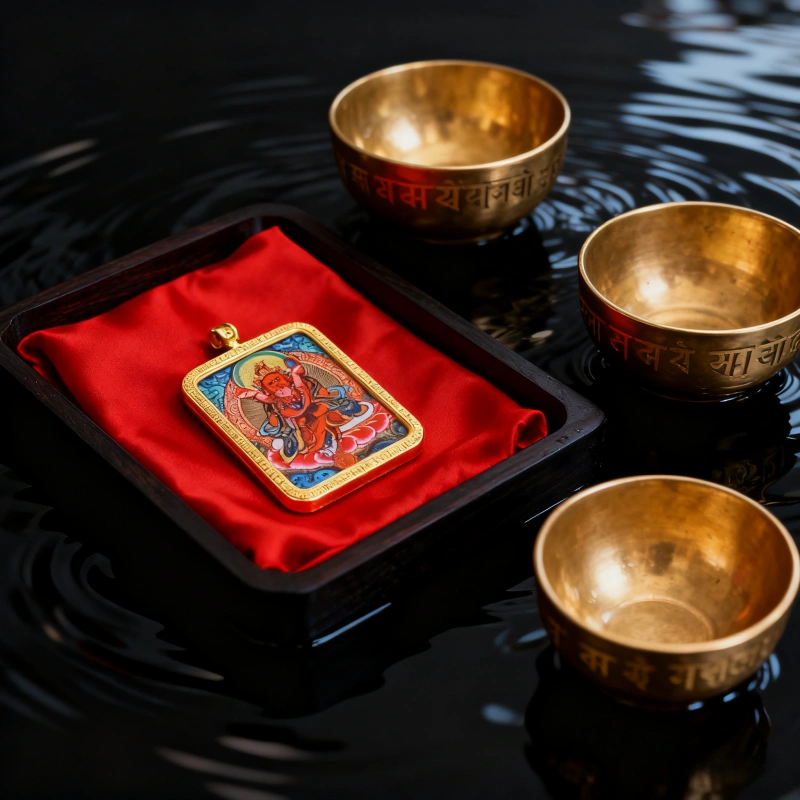
Tibetan Thangka Pigment Preparation: The Ancient Art of Eternal Color | AuraZen Life
To stand before a 500-year-old Tibetan Thangka is to witness a miracle: its reds still burn like ceremonial fires, its greens glow like Himalayan meadows, and its golds shimmer as if laid yesterday. The secret isn’t in modern coatings or synthetic dyes—it’s in the pigment preparation, a sacred, precise process honed by Tibetan artisans for millennia. At AuraZen Life (www.aurazenlife.com), we don’t just replicate this craft—we elevate it, pairing age-old techniques with AI tools that let you trace, understand, and trust every hue in your Thangka. Let’s dive into the art and science of Thangka pigment preparation: the unsung work that makes these pieces last centuries.
First: Why Thangka Pigments Are Unlike Any Other Art Supply
Most artists grab a tube of acrylic or oil paint and start creating. Tibetan Thangka painters? They make their pigments from scratch—and for good reason. Modern chemical pigments fade, crack, or turn muddy in decades. Thangka pigments? They’re forged from nature’s most durable materials: precious minerals (gold, turquoise, malachite), gemstones (coral, agate), and rare plants (saffron, rhubarb, madder).
This isn’t just tradition—it’s engineering. These natural ingredients resist UV damage, humidity, and time. A Thangka painted with authentic pigments will outlive your grandchildren. At AuraZen Life, we source every raw material directly from Himalayan mines and ethical growers (www.aurazenlife.com/pigment-sourcing) — no shortcuts, no synthetic fillers. It’s why our Thangkas are trusted by collectors and meditation studios alike.
The “Family Tree” of Thangka Colors: How Artisans Classify Hues
Tibetan artisans don’t just “mix colors”—they see them as a family, with rules of “kinship” that guide every brushstroke. This system ensures harmony in the final piece and honors centuries of artistic wisdom. Here’s how it works (and how we apply it at AuraZen Life):
The “Fathers” & “Mother” of Pigments
Seven core minerals form the “fathers” of all Thangka colors: indigo, red (cinnabar), green (malachite), ochre yellow, reddish brown, orpiment yellow, and deep blue (lapis lazuli). White clay is the “mother”—the base that softens and balances every hue.
Why this family structure? It’s practical. Each “father” pigment has unique properties: cinnabar (red) is bold and long-lasting, while lapis (blue) needs gentle handling. By classifying them this way, artisans avoid mistakes—like mixing a “father” that fades easily with one that’s permanent. Our AI Color Guide (scan any Thangka’s QR code) breaks down this family tree for your piece, so you know exactly which “fathers” and “mother” went into its hues.
The “Sons” & “Daughters”: Secondary Hues
From the “fathers” and “mother” come secondary colors, called “sons”:
-
Sky blue & light blue = “sons” of indigo
-
Light green & yellow-green = “sons” of malachite green
-
Pink = “son” of cinnabar red
-
Purple & teal = “sons” of deep blue (lapis)
Black-green and reddish-brown act as “sisters”—bridging hues to create depth. Black-brown (a mix of red and black) is the only “servant” pigment, used to shade and define details without overpowering the “family.” Even white and yellow have roles: mixed together, they become milky white—the “bride” that makes reds and greens pop.
The Step-by-Step: How We Prepare Thangka Pigments (Just Like Masters)
Pigment preparation is a days-long process—no shortcuts allowed. Here’s a behind-the-scenes look at how our artisans craft pigments at AuraZen Life:
1. Sourcing & Purifying: The Foundation of Color
We start with raw materials: cinnabar from Sichuan, lapis from Afghanistan’s Badakhshan mines, malachite from Tibet’s eastern plateaus. Each mineral is washed three times in spring water to remove impurities—any dirt would make the pigment gritty. Our AI Sourcing Tool (www.aurazenlife.com/ai-sourcing) lets you see where your Thangka’s pigments came from: watch videos of the mines, meet the growers who harvest saffron, and trace the journey from earth to canvas.
2. Grinding: Turn Rocks Into Silk
Minerals are ground by hand with a stone mortar and pestle—never machines. This takes 4-6 hours per pigment. For softness, we add a dash of ox bile (a natural lubricant) to minerals like lapis and malachite. For plant pigments (like saffron red), we grind with water to release color without damaging the fibers.
The goal? A powder so fine it feels like silk. Gritty pigment leaves streaks; fine pigment glows. Our artisans test fineness by blowing on the powder—if it floats like dust, it’s ready. Want to see this process? Our AR Grinding Tool (www.aurazenlife.com/ar-grinding) lets you “hold” a virtual mortar and pestle and grind lapis into blue pigment—just like our artisans do.
3. Mixing: The Art of Balance
Mixing isn’t guesswork—it’s rule-based, honed over centuries:
-
Gentle Mixes: Reds, greens, and cyans need soft stirring—too much force breaks down pigment particles, dulling color.
-
Vigorous Mixes: Whites, yellows, and blacks require strong stirring to blend evenly (they’re denser, so they need extra work).
-
Regional Tweaks: Himalayan greens mix with water (dry climate = less binder needed); Han-region greens mix with bone glue (humid climate = extra hold).
Some mixes are alchemical: Copper powder + defatted “dala water” + purple grass = vivid red juice. Add soil to that juice = cyan. Add turmeric = yellow-green. Add lapis = deep green. It’s part science, part art—and our artisans know every formula by heart.
4. Preserving: Make Color Last 1,000 Years
Once mixed, pigments get two secret preservatives: bone glue (for stickiness) and ox bile (for mold resistance). We store unused pigment as powder (filtered, baked, and sealed in clay jars) — it stays fresh for years. This is why a 17th-century Thangka in a museum looks as bright as our new pieces (www.aurazenlife.com/museum-quality-thangkas).
The Rules You Can’t Break: Thangka Color-Mixing Taboos
Artisans follow strict taboos to avoid ruining months of work. The biggest? Never mix green (malachite) with arsenic pigment. Even a touch causes “corruption”—lines turn black, colors muddy, and the pigment cracks. Adding too little red to khaki has the same effect.
These aren’t old wives’ tales—they’re chemistry. Malachite’s copper reacts with arsenic, creating a toxic, unstable compound. Our artisans test every batch for purity, and our AI Quality Check Tool (built into our production process) flags risky mixes before they touch canvas. No AuraZen Life Thangka ever breaks these taboos—we guarantee it.
Gold Leaf & Paint Pigments: The Final Touches
Gold is Thangka’s most sacred color—and applying it requires its own pigment prep. We make “gold paint” by boiling sesame oil + frankincense ash (until it’s half the volume), then filtering it. To apply gold leaf: brush this oil mix on canvas, let it dry until tacky, then lay the leaf. It sticks permanently—no peeling, no fading.
For relief details (like a deity’s crown), we apply red clay base first, then rub the oil pigment with wool

Leave a Reply