Artists & Heritage, Aurazen Life, Design & Style, Sacred Symbols, Thangka & Culture, Tibetan Deities
Tibetan Thangka Dyeing Techniques : Color, Ritual & Precision | AuraZen Life
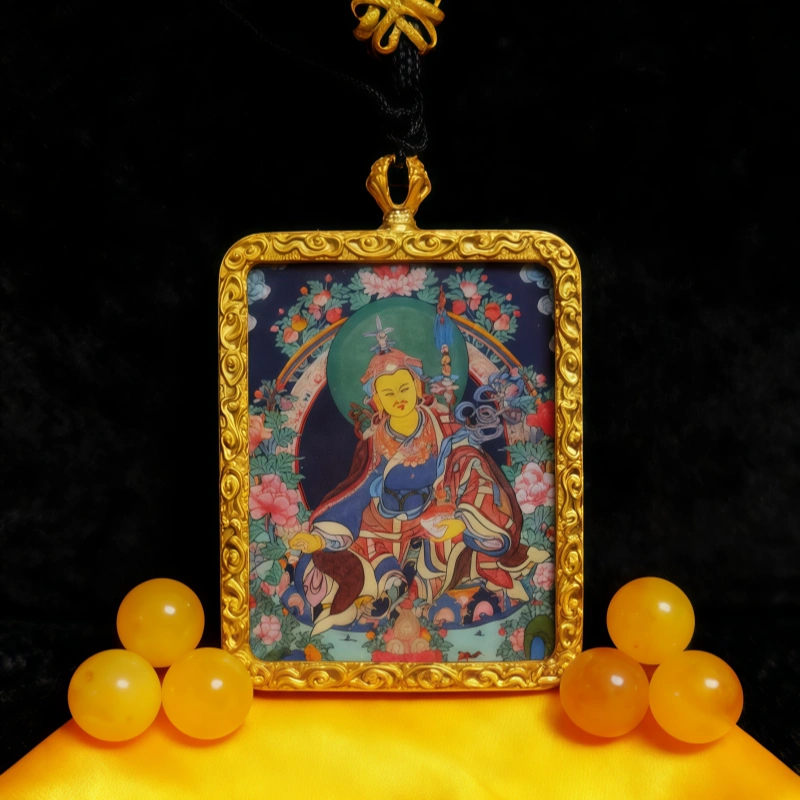
Look closely at a Tibetan Thangka, and you’ll notice more than just bright colors—you’ll see a language. A splash of red isn’t just red; it’s the “realm of Zan” (a sacred domain in Bon tradition). A streak of blue isn’t random; it’s the north, or the wisdom of a Buddha. This is the magic of Thangka dyeing: every hue carries spiritual meaning, and every brushstroke follows centuries of ritual. At AuraZen Life (www.aurazenlife.com), we don’t just dye Thangkas—we honor this language, blending ancient techniques with AI tools that let you decode the stories behind every color. Let’s explore the first chapter of Thangka dyeing: the sacred roots, key rules, and three meticulous techniques that make these artworks come alive.
First: The Spiritual “Code” Behind Thangka Colors
Before a Thangka artisan dips a brush in dye, they know: color is never just decoration. It’s a map of the sacred, shaped by centuries of Tibetan spiritual tradition. Let’s break down the “color code” that guides every AuraZen Life Thangka (and every authentic piece worth its salt):
Rooted in Bon (Tibet’s pre-Buddhist tradition) and refined by Tibetan Buddhism, the code ties hues to realms, directions, and divine wisdom: Bon Tradition Foundations: The “heavenly realm” is white, the “Zan realm” (spirit domain) is red, and the “Lu realm” (water/earth spirits) is blue. Directions get their own shades too: east = white, south = yellow or blue, west = red, north = green or black. Tibetan Buddhism Adaptation: The “Five Wisdom Buddhas” (central figures in tantric practice) are represented by five core hues: red, yellow, blue, green, and white. At AuraZen Life, we don’t just memorize this code—we weave it into every piece. Our AI Color Decoder (scan any Thangka’s QR code) walks you through which sacred meanings align with your artwork’s colors, from the white of purity to the green of healing (www.aurazenlife.com/ai-color-decoder).
The Golden Rules of Thangka Dyeing: Tools, Tests & “Thirty Layers”
Dyeing a Thangka is like performing surgery: precision is non-negotiable. A single loose brush hair or uneven layer can ruin months of work. Here are the unbreakable rules our artisans follow—rules passed down through generations:
1. Choose the Right Brush (It Makes or Breaks the Piece)
Forget cheap synthetic brushes—authentic Thangka dyeing demands handcrafted brushes with tightly bound, fine animal hair (usually goat or squirrel). The bristles must be straight, no bends, and dense enough to hold pigment without dripping. Why? A loose brush leaves streaks; a too-thick one can’t create the tiny details that make Thangkas sing. At AuraZen Life, we source our brushes from a family of Tibetan brush-makers in Lhasa—each one inspected by our master artisans before use. Want to see the difference? Our AR Brush Tool (www.aurazenlife.com/ar-brush) lets you “test” different brushes virtually and see how they affect dye application.
Never dye directly on the canvas—always test first. Our artisans dab pigment on a cotton swatch to check intensity: too dark, and they thin it with a drop of water; too light, and they let it sit to concentrate. This step prevents costly mistakes—imagine redoing a entire sky because the blue was too bright. We even save test swatches for each Thangka, attached to its certificate of authenticity. Scan the swatch’s QR code to see how we adjusted the pigment before dyeing (www.aurazenlife.com/authenticity).
3. “Dye Thirty Layers”—But Know When to Stop
Tibetan masters say, “Dye thirty times”—but it’s not a rigid rule. It’s a reminder that depth takes patience. Some hues (like soft pinks for lotus petals) need 10 light layers to avoid muddiness. Others (like rich lapis blue for skies) need 40 to get that “Himalayan sky” intensity. The key? Let each layer dry completely before adding the next—rush it, and the colors bleed. Our artisans track layer counts with a digital log (shared via our AI Artisan Portal) so you know exactly how much care went into your Thangka’s dyeing (www.aurazenlife.com/artisan-portal).
Technique 1: Dot Dyeing (Diǎn Rǎn) – For Softness & Depth
Dot dyeing is the quiet hero of Thangka detail work—artisans dip the very tip of a fine brush into liquid pigment, then apply tiny, needle-thin dots across the canvas. It’s all about subtlety, and it shines when rendering soft, ethereal elements: clouds, lotus petals, wispy smoke, or distant landscapes. Take the horizon line, for example—dabbing indigo dots where sky meets earth creates a vast, depth-filled effect that makes the scene feel endless. For distant mountains or grasslands, varying dot density and pigment intensity mimics perspective: lighter, sparser dots for faraway peaks, darker, tighter ones for nearby slopes or lawns. A few red-and-white dotted lotus blooms? They bloom with vivid, lifelike energy. The technique demands extreme patience. Our artisans load just a rapeseed-sized amount of pigment on the brush tip at a time, dabbing gently and repeatedly. Sometimes they touch the brush to their saliva (a natural thinning agent) to blend the color into a soft, even spread. Tibetan lore sums up this dedication: “It takes three cuckoo calls to finish a fine Thangka”—meaning three years of work, most spent on dot dyeing. See this precision in action with our 360° Thangka Viewer: zoom into the cloud details of our “White Tara” Thangka to count the tiny dots that make the clouds float (www.aurazenlife.com/360-viewer).
Technique 2: Comb Dyeing (Shū Rǎn) – For Texture & Dimension
Comb dyeing gets its name from the motion: artisans dip a fine brush in pigment, then stroke back and forth across the canvas like combing hair. This repetitive, controlled movement builds texture—perfect for elements that need depth and realism: animal fur, leaf veins, rippling water, flickering flames, or even a deity’s skin. The magic lies in color transition: the first stroke and last stroke must blend seamlessly, no sudden light or dark spots. When done right, comb-dyed skin feels soft and supple, not flat; comb-dyed flames seem to dance. Our master artisan Tenzin, who’s been comb dyeing for 20 years, says, “It’s like braiding—each stroke follows the one before it, no gaps.” We source our comb-dye brushes from a Lhasa family that’s made Thangka tools for 4 generations—tightly bound squirrel hair that holds pigment evenly. Test our brush quality virtually with our AR Brush Tool: see how comb dyeing differs with cheap synthetic brushes vs. our authentic ones (www.aurazenlife.com/ar-brush).
Technique 3: Flash Dyeing (Shǎn Rǎn) – For Glow & Transience
Flash dyeing is where Thangkas get their “glow”—artisans use a tiny brush dipped in pigment mixed with saliva to paint quick, light strokes that fade like a rainbow vanishing in the sky. It’s not about bold color; it’s about subtle radiance. This technique shines on sacred, luminous elements: indigo or malachite lotus petals, burning temple flames, or the shimmering veils behind Buddhas. The saliva thins the pigment just enough to create a soft gradient—no harsh edges, just a gentle glow that makes divine elements feel otherworldly. Mastering flash dyeing takes years. Our apprentices practice on scrap canvas for 2+ years before touching a finished Thangka—one shaky stroke can ruin a deity’s veil. We document this training process in our AI Artisan Portal: watch apprentice Lhamo learn flash dyeing from Tenzin, and see how her strokes improve over time (www.aurazenlife.com/artisan-portal).
Why These Techniques Matter: Authenticity vs. Fake Thangkas
Walk into a tourist shop, and you’ll find “Thangkas” with flat, printed colors—no dot dyeing, no combing, no soul. Those mass-produced fakes skip the spiritual color code and rush the process. At AuraZen Life, we do the opposite: every dot, comb stroke, and flash dye follows centuries of tradition. Our artisans spend 3–6 months dyeing a single Thangka, using the same techniques that kept 500-year-old museum pieces bright. And we don’t hide this work—our AI tools let you decode it: • AI Color Decoder: Scan your Thangka to learn how its colors tie to Bon and Buddhist traditions. • 360° Viewer: Zoom into dye details to see dot and comb strokes up close. • Artisan Portal: Watch the exact artisan dyeing your piece. An authentic Thangka isn’t just art—it’s a story of skill, spirituality, and patience. Ready to own one? Explore our hand-dyed collection, backed by a lifetime color guarantee (www.aurazenlife.com/hand-dyed-thangkas).
