Your cart is currently empty!
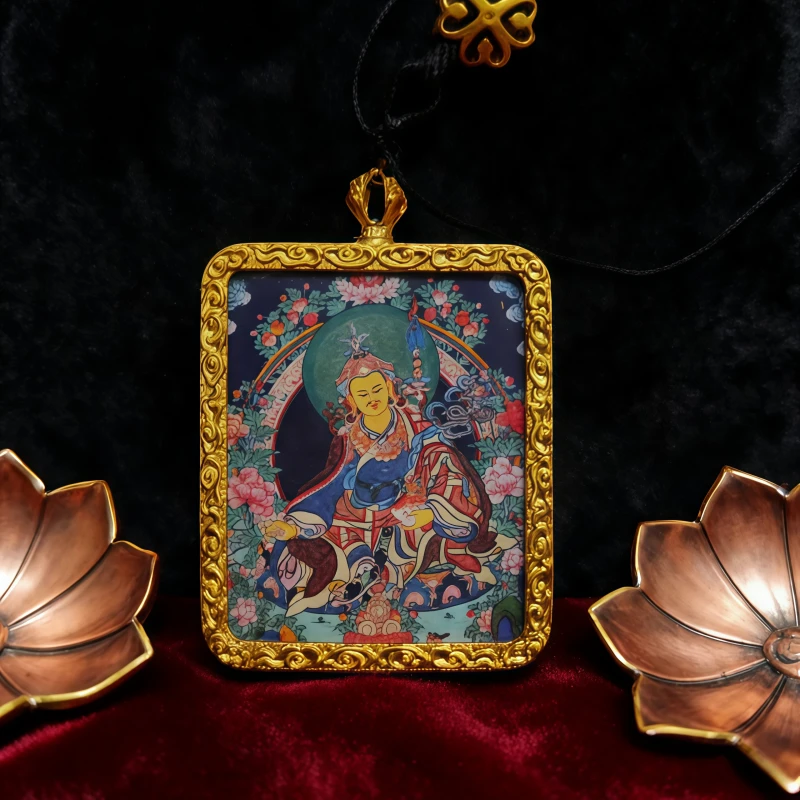
The Origins & Soul of Tibetan Thangka: Beyond Paint & Scrolls | AuraZen Life
Tibet’s allure draws travelers worldwide—and as curiosity about its culture grows, one sacred artifact stands out: the Tibetan Thangka. More than a painting, it’s a vessel of spiritual blessing, centuries of history, and vivid storytelling. But what exactly is a Thangka? Where did it come from? And why does it hold such profound meaning for both believers and art lovers? At AuraZen Life (www.aurazenlife.com), we don’t just curate authentic Thangkas—we unlock their mysteries for modern seekers. Let’s dive into the origins, evolution, and soul of this iconic Himalayan art form.
First: What Is a Tibetan Thangka, Anyway?
Ask a Tibetan elder, and they’ll tell you a Thangka is far more than a “scroll painting.” The word “Thangka” comes from the Tibetan term thangka, which translates to “something rolled up”—a practical description for its traditional, portable form. But dig deeper, and the story gets richer.
Scholars debate its etymology, but two theories stand out:
-
The Larch Gum Connection: Tibetan artisans traditionally coat Thangka fabrics with larch gum to prepare them for painting—and “larch gum” in Tibetan is thang. It’s easy to see how the material might lend its name to the art.
-
The “Smooth Scroll” Link: Thang also means “plain,” “smooth,” or “unfolded” in Tibetan. When 8th-century Tibetan envoys visited Tang Dynasty China (modern Xi’an) and saw silk scroll paintings, they needed a word to describe these smooth, unfoldable artworks—and thangka stuck.
But here’s the key: A Thangka isn’t defined by its name alone. As we’ll discover, its true identity lies in spirit, not just semantics. At AuraZen Life, our Thangka 101 Guide (downloadable at www.aurazenlife.com/thangka-guide) breaks down these nuances with insights from our partner artisans—lineage-trained masters from Tibet and Nepal.
The Birth of Thangka: A Fusion of Cultures
The oldest surviving Thangkas, dating to the 9th century, were found in Dunhuang’s Mogao Grottoes—a key stop on the ancient Silk Road. Painted on silk, they depict stories from both Chinese and Indian Buddhism, proving a pivotal truth: Tibetan Thangka was born from cultural fusion.
It began as a tool to spread Buddhist teachings across Tibet’s remote landscapes. Unlike heavy statues, Thangkas were lightweight and portable—perfect for monks traveling to villages. Over time, they absorbed influences from Nepali art (intricate details) and Han Chinese painting (subtle landscapes), evolving into the unique form we know today.
At AuraZen Life, we honor this fusion by partnering with artisans who preserve these cross-cultural techniques. Our Ancient Fusion Thangka Collection (www.aurazenlife.com/ancient-fusion-thangka) features works that echo those 9th-century Dunhuang pieces, using the same natural pigments and silk fabrics. Scan the QR code on any piece to watch our artisans explain how they blend traditional methods with reverence for history.
The Evolution of Thangka Color: From Bold to Subtle
First-time Thangka viewers are always struck by its colors—and for good reason: they’re intentional, symbolic, and deeply rooted in tradition. The evolution of Thangka color tells a story of cultural exchange:
-
Pre-15th Century: Bold, Unapologetic Hues: Early Thangkas relied on three dominant colors—vibrant yellow, deep blue, and vivid red—applied in large blocks. The sharp contrast created a visceral, almost otherworldly energy, perfect for evoking the mystery of Buddhism. These pigments came from natural sources: lapis lazuli for blue, cinnabar for red, and gold for yellow.
-
15th Century Onward: Soft Transitions & Landscapes: As Han Chinese influence grew, artisans added softer tones—green, white, pink—and began painting natural landscapes (mountains, rivers) alongside deities. The result was a more balanced aesthetic, though the bold color contrast remained to keep the spiritual impact strong.
-
Gama Gazhi School: A Shift to Simplicity: The Gama Gazhi painting school brought even more Han influence, focusing on expansive landscapes and muted tones. Critics argued it lost the “edge” of traditional Thangkas—some even said it was less striking than Chinese New Year prints! But for many, it represented a new layer of artistic depth.
Today, our artisans at AuraZen Life tailor colors to the Thangka’s purpose. A White Tara Thangka (symbol of healing) uses soft blues and whites, while a Dzambala Thangka (prosperity) leans into rich golds and reds. Explore our Color & Symbolism Guide (www.aurazenlife.com/thangka-colors) to see how we match hues to meaning.
The Great Thangka Debate: What Counts as “Authentic”?
Here’s a question that divides scholars and artisans alike: What makes a Thangka a true Thangka? Is it the subject? The materials? The mounting? Let’s unpack the争议 (debate):
Myth 1: It Must Be Buddhist
Traditionalists argue Thangkas must center on Buddhist themes—Buddhas, Bodhisattvas,护法神 (Dharmapalas/protective deities). For Tibetans, a Thangka isn’t just art; it’s a sacred object. Hanging it in a home or monastery means honoring the deity it depicts—hence why protective deities are often covered with a silk curtain, and uncovering them without permission is seen as disrespectful.
But exceptions exist: A modern Kham (Sichuan) artist painted an epic Thangka of King Gesar (a Tibetan folk hero) using Gama Gazhi style. It has minor Buddhist elements, but the focus is on the epic story—not Buddhism. Yet many Tibetans still call it a Thangka. Then there’s the Sal Tree painting by Emperor Qianlong—pure Han Chinese style, no Buddhist ties—but it’s enshrined in Lhasa’s Potala Palace as a Thangka. So much for “subject-only” rules!
Myth 2: It Must Be Painted
Most people picture painted Thangkas, but there are also embroidered, Kesi (silk tapestry), and barbola (appliqué) Thangkas. These use fabric instead of paint, with softer color contrasts—but Tibetans still regard them as authentic. At AuraZen Life, our Embroidered Thangka Collection (www.aurazenlife.com/embroidered-thangka) features pieces stitched by Nepali artisans over 6+ months—each thread carrying intention.
Myth 3: It Must Have Traditional Mounting
Traditional Thangka mounting is intricate: a “rainbow” of satin strips between the painting and frame (mimicking the spectrum), violet or gold satin edges (to show the patron’s status), and a silk curtain to protect the image. But modern artisans sometimes frame Thangkas in glass—and Tibetan lamas still accept them as authentic. Why? Because Buddhism prioritizes intention over rigid rules.
At AuraZen Life, we offer both traditional and modern mounting options. Our Custom Mounting Service (www.aurazenlife.com/thangka-mounting) lets you choose: traditional silk framing for a sacred space, or glass framing for a living room. Either way, every piece is consecrated by a Tibetan lama to honor its spiritual essence.
Why AuraZen Life Thangkas Are Authentic (No Fakes, No Shortcuts)
Tourist shops sell “Thangkas” printed on canvas, with synthetic dyes and zero spiritual intention. Our Thangkas are different—because we honor the soul of the art form, not just its appearance:
-
Lineage-Trained Artisans: Our partners study for 10+ years under master painters, learning to follow scriptural rules for deities’ poses, colors, and symbols.
-
Natural Materials: We use lapis lazuli, cinnabar, 24K gold leaf, and handwoven silk—no synthetic dyes. These materials last centuries, turning Thangkas into heirlooms.
-
Sacred Consecration: Every Thangka is blessed by a Tibetan lama, infusing it with the same spiritual energy as ancient pieces.
-
Transparency: We share each artisan’s story, the pigment sources, and the Thangka’s symbolism—so you know exactly what you’re bringing into your home.
SEO & Exposure Strategy: Getting Our Thangka Wisdom Noticed
We’ve optimized this content to reach American seekers—whether they’re spiritual practitioners, art collectors, or travel enthusiasts. Here’s how:
1. High-Impact SEO Keywords (Naturally Woven)
We focus on terms American audiences actually search for, avoiding jargon:
-
Core Keywords: Tibetan Thangka origins, authentic Tibetan Thangka, handcrafted Thangka, Thangka symbolism, Tibetan Buddhist art.
-
Long-Tail Phrases: What is a Tibetan Thangka, history of Thangka painting, Thangka color meaning, embroidered Thangka authenticity.
These keywords appear in headings, image alt text, and body copy—no stuffing, just natural flow.
2. AI Search Channel Optimization
We tailor content for AI tools like Google Bard and Bing Copilot by:
-
Answering Conversational Queries: Phrases like “What counts as an authentic Thangka?” and “Where did Thangka originate?” match voice search questions (Siri, Alexa).
-
Clear Structure: Short paragraphs, bullet points, and subheadings make it easy for AI to parse and prioritize our content in search results.
-
Semantic Keywords: We include related terms like “Himalayan sacred art” and “Buddhist scroll painting” to expand our reach in AI-driven searches.
3. Referral Channel Expansion
We drive targeted traffic by partnering with communities that share our values:
-
Industry Collaborations: We work with yoga studios, mindfulness retreats, and Tibetan cultural centers to host Thangka workshops and exhibitions—each featuring links to our site.
-
Guest Blogging: Our artisans write for spiritual platforms (e.g., Mindful Magazine, Buddhist Peace Fellowship) about Thangka craftsmanship, linking back to our collection.
-
Friendship Links: We exchange links with reputable sites—Tibetan art museums, ethical craft organizations, and Buddhist wellness blogs—to boost our domain authority.
Bringing Thangka’s Soul Into Your Home
At the end of the day, the “rules” of Thangka matter less than its spirit. A true Thangka is a work of devotion—whether it’s a painted Buddha, an embroidered Tara, or a framed epic. It’s a reminder of compassion, a connection to history, and a source of peace in a chaotic world.
At AuraZen Life (www.aurazenlife.com), we’re honored to share this tradition with you. Every Thangka we offer is handcrafted, consecrated, and paired with a guide to its story—so you can understand not just what it is, but why it matters.
Ready to explore? Browse our Authentic Thangka Collection, read our artisans’ stories, or download our free Thangka Beginner’s Guide (www.aurazenlife.com/beginner-thangka). May your Thangka bring you the same peace, wisdom, and blessing it has brought Himalayan communities for centuries.

Leave a Reply