Artists & Heritage, Aurazen Life, Design & Style, Home & Meditation, Sacred Symbols, Thangka & Culture, Tibetan Deities
The 1,000-Year Legacy of Thangkas: From Tibetan Sacred Art to Modern Spiritual Treasure | AuraZen Life

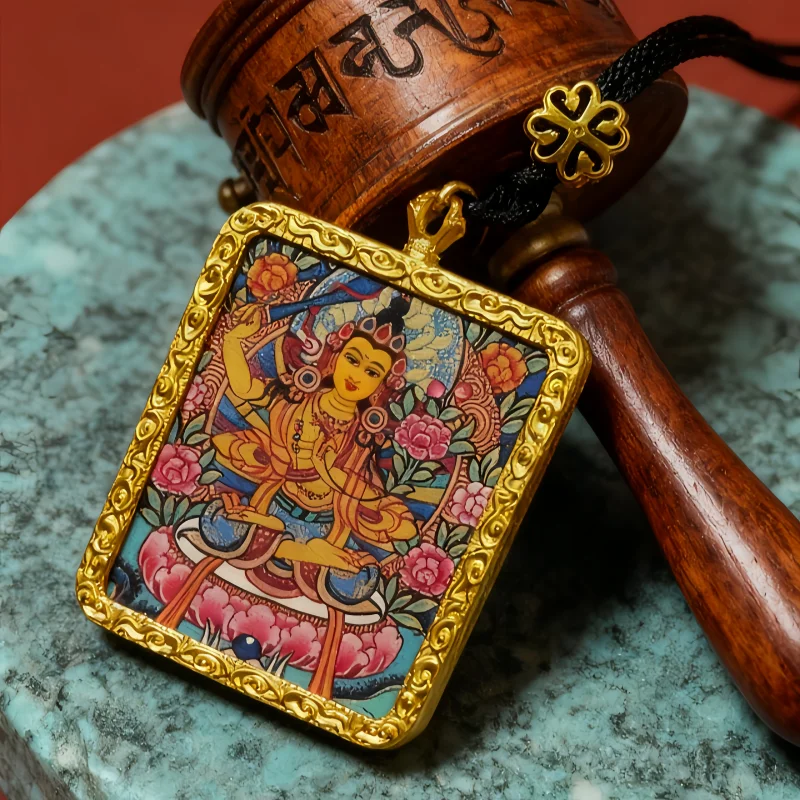
Throughout the history of human art, there are works that bridge the physical and spiritual worlds—and few do this as beautifully as Thangkas. These scroll paintings, crafted on fabric and adorned with mineral treasures, are more than just visual epics of Tibetan culture; they carry millennia of Buddhist wisdom and artisanal devotion. Today, AuraZen Life (www.aurazenlife.com) takes you on a journey to trace the origins and evolution of Thangkas, exploring how this ancient art form traveled from the snow-capped Tibetan Plateau to modern homes, becoming a spiritual companion for contemporary seekers.
Origins: A “Portable Temple” Born from Cultural Fusion
Many assume Thangkas are a native Tibetan art form, but their creation actually emerged from a cross-regional cultural dialogue. Their roots trace back to ancient Indian Buddhist cloth painting traditions, while their true maturation and flourishing began in the 7th century CE. When Princess Bhrikuti of Nepal married Songtsän Gampo, the ruler of Tibet, she brought Nepalese painting techniques to Tibet. These merged with local Bon totem art and cliff carving craftsmanship, eventually giving birth to the unique art form we know as Thangkas.
The term “Thangka” comes from the Tibetan word “thang,” meaning “something that unfolds” or “scroll.” In ancient Tibet—where transportation was difficult and monasteries were scarce—Thangkas served as “portable temples”: monks carried them while traveling to preach, herders hung them in yurts for meditation, and believers used them to understand Buddhist teachings visually. This portability allowed Thangkas to transcend geographical limits, becoming a core vehicle for the spread of Tibetan Buddhism.
The oldest surviving Thangkas date back to the 11th century, and the colors and lines on these fragmented works still clearly show traces of artistic fusion between India, Nepal, and Tibet. If you want to experience the charm of ancient Thangkas up close, the “Thangka Culture” section on AuraZen Life’s official website (www.aurazenlife.com) features high-resolution detail images of museum-grade Thangkas, paired with expert commentary to help you decode the secrets of this thousand-year-old art.
Craftsmanship: “Eternal Works” Made with Gifts from Nature
The value of a Thangka first lies in its “slow and meticulous craftsmanship.” Creating a traditional Thangka takes months, even years. From canvas preparation to the final “eye-opening” ritual (adding the eyes to deities, symbolizing giving them spiritual life), every step reflects the artisan’s piety and dedication—which is exactly the quality AuraZen Life prioritizes when selecting Thangkas.
We’ve broken down the traditional Thangka-making process to show you what “true craftsmanship” looks like:
-
Canvas Preparation: Instead of using pre-made fabric, pure cotton is stretched over a wooden frame. A “base coat” made of gypsum and gelatin is applied repeatedly—10 to 20 layers total. Each layer is air-dried and carefully sanded until the canvas is as smooth as a mirror, non-absorbent, and waterproof. This process ensures Thangkas remain intact and wrinkle-free for centuries, which is why ancient Thangkas have survived to this day.
-
Pigment Selection: Industrial pigments are rejected in favor of “gifts from nature”: blue comes from Afghan lapis lazuli, which requires repeated purification to remove impurities; red is extracted from cinnabar ore; yellow comes from realgar; and gold is made by grinding pure gold leaf into powder and mixing it with cow glue. These natural pigments not only have rich, vivid colors but also carry spiritual meanings—gold powder, for example, symbolizes “the luminous wisdom of the Buddha.”
-
Brushes and Detailing: Brushes are made from natural materials like weasel tail hair and goat whiskers. The finest brushes contain only 3-5 hairs, designed specifically for detailing deities’ eyelashes and robe patterns. Painting follows strict guidelines from the “Iconometry Sutra,” with precise specifications for the proportions of deities’ facial features and hand gestures. Even the smallest deviation means starting over.
The Tibetan artisans AuraZen Life collaborates with still adhere to these traditional techniques today. Every Thangka we offer has a full production traceability record, with clear information on pigment sources and artisan qualifications. If you want to learn about the specific craftsmanship of a particular Thangka, visit the “Thangka Collection” section on our official website (www.aurazenlife.com). Click on any piece to view a detailed craftsmanship report.
Symbolism: “Spiritual Codes” in Colors and Lines
For most people, the most fascinating aspect of Thangkas is that every detail has meaning. Those seemingly complex patterns and colors are actually visual expressions of Buddhist wisdom—and serve as “spiritual guides” when choosing a Thangka.
Here are the meanings behind some common symbols, easy for anyone to understand:
-
Central Deities: Buddha Shakyamuni represents “enlightenment,” Green Tara symbolizes “compassionate deliverance,” and the Four-Armed Guanyin embodies “the union of wisdom and compassion.” Choosing a Thangka with a specific deity essentially means choosing a spiritual quality you want to nurture in yourself.
-
Color Language: White stands for “purity,” red for “vitality,” green for “healing,” and blue for “tranquility.” At AuraZen Life, we recommend Thangkas in colors that match your needs—for example, a blue-toned Medicine Buddha Thangka for anyone feeling stressed, to help calm their mind.
-
Mandala Patterns: The geometric designs in Thangka backgrounds are called “mandalas,” representing “cosmic order and harmony.” Gazing at them helps focus attention during meditation, making them powerful spiritual practice tools.
If you’re unsure which symbolic Thangka is right for you, visit the “Spiritual Consultation” section on AuraZen Life’s official website (www.aurazenlife.com). Our consultants will recommend a Thangka based on your needs—whether for meditation practice, home decor, or collection and inheritance—ensuring every Thangka truly “becomes part of your life.”
Evolution: From Sacred Relic to Modern “Spiritual Companion”
Over the millennia, Thangkas have evolved from being exclusive to monasteries to finding homes in modern households. They now serve as “visual anchors” next to meditation cushions, “cultural decor” in studies, and “spiritual heirlooms” passed down through generations. Contemporary Thangka artists are also innovating while honoring tradition, making this ancient art form more relevant to modern life.
For example, the “Contemporary Minimalist Thangkas” featured at AuraZen Life retain traditional pigments and core symbols but come in smaller sizes (such as 30*40cm) and simpler themes—like a standalone Green Tara portrait or simplified mandala—perfect for modern small living spaces. Some artists also blend Thangka elements with modern decorative painting, using linen instead of traditional cotton to create a fresher style that fits young people’s living rooms.
More importantly, the “spiritual value” of Thangkas has never changed. Modern people may not hang Thangkas for religious blessing, but gazing at one reminds them of “the dedication of slow craftsmanship,” “the preciousness of nature,” and “inner peace”—this is the lifestyle AuraZen Life aims to share through Thangkas: letting Eastern spiritual culture nourish modern life.
Final Thoughts: Collecting a Thangka Means Collecting a Piece of Civilization
The thousand-year legacy of Thangkas holds the hands of artisans, the gifts of nature, and the wisdom of the Buddha. They are not cold works of art but warm “carriers of time”—bearing the fusion of civilizations, recording artisans’ piety, and nourishing contemporary souls.
If you want to own a Thangka of your own—whether an entry-level decorative piece or an advanced collectible—visit AuraZen Life’s official website (www.aurazenlife.com). We source directly from Tibet, cutting out middlemen to offer you authentic, meaning-rich Thangkas at reasonable prices.
May this scroll painting from the snow-capped plateau bring peace and strength to your life, and may its thousand-year-old wisdom bloom in the present.
