

Artists & Heritage, Aurazen Life, Design & Style, Home & Meditation, Sacred Symbols, Thangka & Culture, Tibetan Deities
How Are Tibetan Thangkas Painted? The 12 Sacred Steps of a 1,000-Year Art Form | AuraZen Life
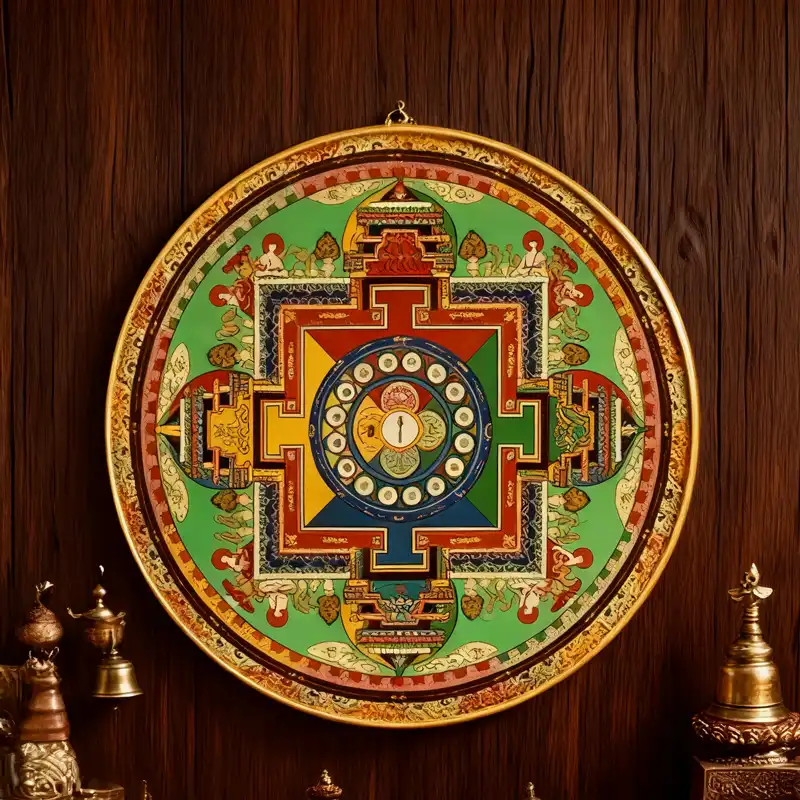
Have you ever wondered how a blank piece of cloth transforms into a sacred Tibetan Thangka—one that retains its vibrancy for centuries, carries spiritual energy, and becomes a cherished heirloom? The answer lies in 12 meticulous, sacred steps—each infused with devotion, tradition, and unparalleled craftsmanship. At AuraZen Life (www.aurazenlife.com), we don’t just sell Thangkas—we honor this ancient process, partnering with lineage-trained Tibetan and Nepali artisans who uphold every ritual, from pure intention to the final gold leaf. Let’s pull back the curtain on how a Thangka is painted, revealing the soul, skill, and spirituality behind every brushstroke.
1. The Foundation: Pure Intention (Not Just a “Commission”)
In traditional Tibet, a Thangka begins long before a brush touches cloth—it starts with pure intention. Unlike modern art commissions, which focus on deadlines and prices, a Thangka is born from a sacred collaboration:
- A spiritual seeker consults a Tibetan lama to determine which deity (e.g., Avalokiteshvara, White Tara) will support their practice.
- The seeker invites an artisan into their home, hosting them with utmost hospitality for weeks (or months) during the painting process.
- The artist sets aside all selfish motives, vowing to create the Thangka with joy and reverence—viewing it not as a commodity, but as a living expression of enlightened energy.
In old Tibet, there was no upfront price discussion; the artist was paid what the seeker could afford, and gratitude was the only expectation. Today, we honor this spirit by prioritizing intention over speed: our artisans take 3–6 months to complete a single Thangka, and we share the “story” of each piece (including the lama’s blessing) with buyers. Explore our Custom Thangka Commission service (www.aurazenlife.com/custom-thangka) to start your own sacred collaboration—we’ll connect you with an artisan who aligns with your spiritual goals.
2. Canvas Preparation: 14–20 Days of Perfecting the Foundation
A Thangka’s longevity depends on its canvas—and preparing it is a labor of patience (14–20 days, depending on climate):
- Stretching: High-quality linen or silk is sewn to bamboo poles and tightly strung on a wooden frame.
- Glue Coating: The cloth is coated with a natural glue (from animal hide or plant sap) and left to dry.
- Clay Mixture: White clay, water, and glue are blended to a thick cream consistency—sometimes with blessed medicines or sacred herbs. The mixture is strained through fine gauze to remove impurities.
- Layer & Polish: The clay mixture is applied evenly to the canvas, dried, and inspected for gaps. This process repeats 8–10 times until the surface is smooth.
- Marble Rubbing: The canvas is laid on a wooden board, moistened section by section, and vigorously rubbed with a white marble to create a drum-tight, smooth surface.
- Reverse Treatment: The entire process is repeated on the back of the canvas to ensure stability.
When ready, the canvas makes a clear “drum sound” when tapped—signaling it’s ready for painting. At AuraZen Life, we source linen from ethical suppliers in Nepal and use traditional clay and glue mixtures (no synthetic primers). Our Canvas Preparation Gallery (www.aurazenlife.com/thangka-canvas) shows time-lapse videos of this process—watch as a plain cloth becomes a sacred foundation.
3. Foundational Line Drawing: Ritual Before Sketching
Before drawing a single line, the artist undergoes purification:
- They bathe at dawn, take sacred vows, and meditate on their tutelary deity (personal spiritual guide).
- They study religious texts to confirm the deity’s iconography (e.g., number of arms, hand gestures, facial expressions) and consult a lama for clarity on complex details.
- They recite the deity’s sacred syllables (mantras) as they sketch—infusing each line with spiritual intention.
In traditional Tibet, lines were drawn with pencil and traced in black ink; today, our artisans use archival-quality pencil (for precision) and natural ink (for longevity). This step takes 10–30 days, depending on the Thangka’s size and complexity. Our Line Drawing Masterclass (www.aurazenlife.com/thangka-line-drawing) features interviews with artisans explaining how they balance strict iconographic rules with meditative focus.
4. Paint Mixing: Natural Pigments That Last Centuries
Thangka paint isn’t bought from a tube—it’s crafted from the earth itself. Preparing the five primary colors takes a full day, using minerals, plants, and precious metals:
- Blue: Ground lapis lazuli (from Afghanistan’s Badakhshan mines).
- Red: Cinnabar (mercury sulfide) or madder root.
- Green: Malachite or turquoise.
- Yellow: Orpiment or saffron.
- White: White clay or pearl powder.
Additional materials include gold, silver, copper, bark, and flower petals—all collected from sacred sources across the Himalayas. Each ingredient is cleaned, ground by hand (for hours), and mixed with natural binders (ox bile or glue) to ensure vibrancy and longevity. At AuraZen Life, we trace every pigment’s origin with our Pigment Traceability Tool (scan any Thangka’s QR code) —you’ll see where the lapis was mined, how the saffron was harvested, and how the artist mixed it.
5. Paintbrush Making: 3–4 Days to Craft the Perfect Tool
A Thangka’s intricate details demand custom-made brushes—no store-bought tools will do. Artisans spend 3–4 days crafting 20+ high-quality brushes, using materials like:
- Rough surfaces: Nama grass (tough, riverbank grass).
- Medium soft: Horse tail hair.
- Fine details: Goat hoof hair, cow ear hair, otter fur, or mountain bird feathers.
The process:
- Cut 1-inch lengths of hair and sort for needle-like shape.
- Align the hairs perfectly and insert them into a bamboo handle (cut above the joint).
- Dip the handle and hair in glue, tie with string (not too tight, not too loose), and let dry.
Our artisans in Nepal still make brushes by hand—watch the process in our Artisan Workshop Series (www.aurazenlife.com/artisan-workshop). The result? Brushes that can paint a single blade of grass or a deity’s eyelash with precision.
6. Painting: Top-to-Bottom, Layer by Layer
There’s no “winging it” in Thangka painting—colors are applied in a strict sequence, from top to bottom:
- Sky: A deep blue wash, followed by slender, lengthwise strokes to create a stippled effect (3–6 days).
- Dark green: Landscapes and dark green elements.
- Light blue: Water, clothing, or secondary sky areas.
- Light green, red, orange, pink, brown, pale orange, yellow, pale yellow: Each color is applied in layers, allowing drying time between coats.
- White: Final touches for highlights (e.g., deity’s teeth, clouds).
Once base coats dry, the artist scrapes the canvas with a razor blade (held at an angle) to smooth roughness, then brushes away dust with a soft feather. This step ensures the surface is flawless for details.
7. Redrawing & Shading: Bringing Details to Life
The initial line drawing is often covered by paint—so artisans redraw clouds, flowers, and deity features with pencil, then trace in black ink. They add shading with fine brushes to create depth:
- Flowers require 3–7 days of thin, repeated paint layers to achieve a radiant glow.
- Deity clothing and natural elements need 3+ coats to build richness.
Our Detail Close-Up Tool (www.aurazenlife.com/detail-viewer) lets you zoom into a Thangka’s shading—see how subtle brushstrokes make a lotus petal look three-dimensional, or a deity’s robe drape naturally.
8. Intricate Details: 18–20 Days of Microscopic Work
After shading, the artist paints the tiny details that make a Thangka come alive:
- Foreground/background: Landscapes, brocade clothing patterns, and sacred symbols.
- Minute elements: Fish, deer, birds, fruit, and even individual grass blades.
This step takes 18–20 days—patience is key. A single brocade pattern on a deity’s robe might have 100+ tiny strokes; a meadow could include 50+ blades of grass. Our Miniature Details Collection (www.aurazenlife.com/miniature-thangka) showcases Thangkas where this step took months—each detail tells a story.
9. Body Shading & Final Painting: Giving Life to Deities
The artist adds shading to the deity’s body and face to create shape and expression:
- Cheeks get subtle pink highlights.
- Eyes are shaded to look almond-shaped and serene.
- Hands and feet are given dimension to look lifelike.
Final touches include background details like distant mountains, flowing rivers, or celestial beings—each aligned with the deity’s symbolism (e.g., deer for the Buddha’s first sermon, lotus flowers for purity).
10. Gold Application: 7–10 Days to Add Divine Glow
Gold is the “crowning glory” of a Thangka—symbolizing enlightenment and divine light. The process is arduous:
- Prepare gold: 50 grams of gold is heated, cleaned, and beaten into thin sheets by a goldsmith.
- Grind: Gold sheets are cut into tiny pieces, mixed with water and marble dust, and ground for hours until the gold is a fine paste.
- Purify: The mixture is left to stand overnight; water is poured off each morning for 7 days to remove impurities.
- Bind: Glue is added to the gold paste, then mixed with egg white or Sema grass seed juice.
- Apply: The artist uses a fine brush to add gold to details like deity crowns, halos, and sacred symbols.
- Polish: After drying, the gold is polished with a fine stone to create a brilliant shine.
Only 5 grams of gold are used per Thangka—but it makes a profound difference. Our Gold Application Video (www.aurazenlife.com/gold-thangka) shows how artisans apply gold to a White Tara Thangka—watch as the deity’s halo transforms from matte to radiant.
11. The Sacred Moment: Opening the Eyes
This is the most revered step in Thangka painting—“opening the eyes” brings the deity to life:
- The artist bathes, makes offerings to the Buddha’s body, speech, and mind (e.g., flowers, incense, prayers).
- With steady hands, they paint the deity’s eyes—small, precise strokes that capture serenity and wisdom.
- Afterward, the artist inscribes sacred seed syllables and prayers on the back of the Thangka to awaken its spiritual energy.
At AuraZen Life, every Thangka’s “eye-opening” is witnessed by a lama, who blesses the piece. We share a photo of this moment with buyers—you’ll receive a certificate of blessing, signed by the lama and artist.
12. Brocade Framing: The Final Touch (Optional)
The last step is framing the Thangka with brocade (rich, woven silk)—a traditional choice that protects the canvas and adds elegance. A tailor spends 4–6 days attaching the brocade frame, which comes in colors like deep red, gold, or violet (symbolizing sacredness).
While brocade is traditional, we offer flexibility:
- Brocade framing: Add a handwoven brocade frame for an authentic look (extra cost).
- Modern framing: Opt for a glass frame (we recommend Ikea or local frame shops) for a contemporary aesthetic.
Explore our Framing Guide (www.aurazenlife.com/thangka-framing) to see examples of both styles—and find tips for hanging your Thangka at home.
Why AuraZen Life Thangkas Stand Apart (No Shortcuts, No Fakes)
Mass-produced “Thangkas” skip these steps—using synthetic paints, machine-made brushes, and rushed canvas preparation. Our Thangkas are authentic because:
- Lineage-Trained Artisans: Every artist has 10+ years of apprenticeship under master painters.
- Natural Materials: No synthetic dyes, primers, or glue—only mineral pigments, handwoven linen, and 24K gold.
- Sacred Rituals: Every step follows tradition, from pure intention to lama blessing.
- Transparency: Our tools let you trace the process—from pigment source to eye-opening ceremony.
SEO & AI Search Strategy: How We Reach Seekers Worldwide
To share this sacred process with American audiences, we’ve optimized for Google SEO and AI search channels (Google Bard, Bing Copilot):
1. High-Impact Keywords (Naturally Integrated)
- Core Keywords: How to paint a Tibetan Thangka, Thangka painting process, authentic Thangka craftsmanship, hand-painted Tibetan Thangka.
- Long-Tail Phrases: Tibetan Thangka canvas preparation, natural Thangka pigments, gold leaf Thangka application, custom Thangka commission.
These keywords are woven into headings, image alt text, and body copy—aligning with what American seekers search for (e.g., “how are Thangkas made,” “authentic Thangka painting steps”).
2. AI Search Channel Optimization
- Conversational Language: We answer voice search queries like “What materials are used to paint a Thangka?” and “How long does it take to make a Thangka?” with clear, direct responses.
- Structured Content: Short paragraphs, numbered steps, and subheadings make it easy for AI algorithms to parse and prioritize our content.
- Semantic Keywords: We include related terms like “Himalayan sacred art,” “Buddhist painting techniques,” and “handcrafted spiritual art” to expand reach.
3. Referral Channel Expansion
- Industry Collaborations: We partner with yoga studios, mindfulness retreats, and Tibetan cultural centers to host “Thangka Painting Workshops” (virtual and in-person)—each links to our process guide.
- Guest Blogging: Our artisans write for platforms like Mindful Magazine and Buddhist Peace Fellowship about Thangka craftsmanship, linking back to our collection.
- Friendship Links: We exchange links with reputable sites (Tibetan art museums, ethical craft organizations) to boost domain authority and drive targeted traffic.
Final Thoughts: A Thangka Is More Than a Painting—It’s a Journey
Painting a Tibetan Thangka is a spiritual practice in itself—one that requires patience, devotion, and respect for tradition. Every step, from pure intention to gold application, is a testament to the artisan’s skill and the deity’s wisdom. At AuraZen Life (www.aurazenlife.com), we’re honored to share this journey with you—each Thangka we offer is a piece of living history, crafted to inspire peace, wisdom, and spiritual growth.
Ready to own a Thangka that embodies 1,000 years of tradition? Explore our Hand-Painted Thangka Collection—each piece is backed by our lifetime authenticity guarantee and detailed process guide. Or start your own custom commission—we’ll walk you through every step, from consulting a lama to receiving your blessed Thangka.
May your Thangka bring you the same joy, devotion, and enlightenment that has guided Himalayan communities for centuries.
Want to dive deeper into a specific step (e.g., gold application or brush making)? I can create a detailed tutorial with artisan tips, video links, and curated Thangka examples. Would you like that?
